
Alaska in October: 19 Pros & Cons of Visiting Alaska in Fall

What are the pros and cons of visiting Alaska in October? Is the fall a good time to visit Alaska?
We’ve lived in Alaska throughout autumn, and despite it being the end of the fishing season, we actually believe that October is the best time to visit the Last Frontier!
There are still plenty of wildlife roaming the local neighborhoods and roads, the northern lights are beginning t0 make an appearance, the mountains are snow-capped, and the trees are covered in stunning, vibrant foliage.
We’ve found that the weather is usually quite comfortable and everyone is preparing for the long winter ahead, so depending on what you’re looking for out of your trip, there are several pros and cons to consider when planning a trip to Alaska in October.
In this post, we’ll discuss the main advantages and disadvantages of visiting Alaska in the fall to help you decide whether this is the best time for your trip based on your own travel preferences and the things you want to do while in the 49th state!
We’ve also provided a full assessment of the weather you can expect and a complete list of the best things to do in Alaska in the fall. Be sure to grab your free download of our first timers’ guide to Alaska below!
Pros of Visiting Alaska in October

- Northern Lights: One of the major highlights of visiting Alaska in the fall is the opportunity to witness the spectacular natural phenomenon known as the northern lights (also known as the Aurora Borealis).
The season starts in late September, so October visitors have a good chance of experiencing this magical light show! - Fall Foliage: Alaska actually happens to be our favorite place in the world for fall foliage, and that says something after growing up in New England and going to college in Vermont!
With its vibrant shades of red, orange, and yellow painting the landscapes, fall is the perfect time to enjoy the scenery, especially in areas like Denali National Park. - Wildlife Viewing: Fall is a great time to see Alaska’s wildlife. Moose are commonly spotted during the rutting season between September and October, and migratory birds are in full flight. We’ve also had good luck seeing black bears during this time in the interior part of the state.
- Fewer Tourists: Compared to the summer months, October brings in far fewer tourists making for less crowded attractions and better opportunities for photography without masses of people!
Plus, most Alaska cruises end in September, so you won’t be waiting for hours for a restaurant table in the popular cruise ports like Juneau, Skagway, and Ketchikan. - Lower Costs: Flights and accommodations are usually less expensive in fall than in peak summer months, making October a cost-effective time to visit.
- First Snow: You might experience the first snowfall if you visit Alaska in October! It usually happens in September near Denali, but if you’ll be on the Kenai Peninsula or in Southeast Alaska then you’ll likely be one of the first to see this symbolic event.
- The Weather is Mild: While September is actually peak season for aurora viewing, it doesn’t typically have the clearest weather which leads to a lot of failed sightseeing attempts.
But, October, offers chillier and often clearer weather, which is comfortable for outdoor activities and provides incredible aurora viewing conditions! - Local Pubs & Restaurants Become Less Crowded: In the summer months on the Kenai Peninsula and popular port cities, it’s relatively normal to wait an hour or two for a table at a good restaurant.
We’ve waited over a half hour just for a spot to stand at the bar at the 49th State Brewing Company in Anchorage! But, once all the tourists depart, you’ll have your pick of where to sit practically anywhere you want to go. - The Scenery is Amplified: Come late September, the mountains all over the state turn bright white, the glaciers become even more beautiful with a layer of snow, and the foliage is out of this world.
Whether you’re a photographer or just a sucker for a good photo post on your socials, you won’t find a more beautiful time to visit Alaska than in the fall! - The Hiking Trails Are Still Open: Despite snow starting to make its way into the parks, glacier treks and hiking trails around the state are still typically passable until the end of the month!
Cons of Visiting Alaska in October

- Colder Weather: October signals the onset of winter in Alaska which means you need to be prepared for plummeting temperatures, making it essential to pack some quality winter gear.
If you’re not a fan of cold weather, this could be a major downside for you on your tri0p, particularly if you’ll be in the interior of the state near Fairbanks. - Limited Daylight: With winter approaching, the days will be far shorter in October than in the summer months. This can limit the amount of daylight available for outdoor activities and sightseeing, which is something you should consider if you have particular activities in mind.
- Closed Attractions and Businesses: Some tourist attractions and businesses may be closed, as October falls in the off-season. This includes certain tour operators, restaurants, and accommodations. Denali National Park closes at the first snowfall which often occurs in September, so this is probably to consider if it’s on your bucket list.
- Unpredictable Weather: October can be an unpredictable month in terms of weather, with a mix of sun, rain, and snow. This could potentially disrupt your travel plans if you don’t pack appropriately or you’re banking on weather-dependent activities like northern lights viewing or snowmobiling.
- Wildlife May Be Sparse: While it’s still possible to spot moose and migratory birds, many of Alaska’s iconic wildlife, like bears, start hibernating in October which means your chances begin to dwindle the later in the month you visit.
It really depends on the weather and how long the fish are around for, so the local populations numbers will vary from year to year. - Road Conditions Can be Poor: Alaska is no stranger to slippery and hazardous road conditions, particularly in remote areas with less road maintenance. If you’ll be taking an Alaska road trip, then you’ll want to plan ahead by booking a fully outfitted rental car!
- Travel and Shipping Interruptions are Common: Everything from flight delays to food delays can interrupt your Alaska travels come late autumn. Delays caused by weather may impact the food you’ll be able to order in restaurants, while flight cancelations could mess up your schedule on either end of your trip.
- Fishing Season Is Practically Over: Come late fall, you can still occasionally find a few fish left in the local rivers and ocean, but they’ve typically left by the masses at this point so fishing tours are no longer operational.
- The Coastline Will Smell Very Bad: While the salmon run is an incredible site to see when thousands of salmon make their way upstream across the state, come autumn, the salmon that don’t make it end up dying and get washed up all over Alaska’s coastline.
The smell becomes quite rancid and attracts a plethora of carnivores looking to fill their bellies with the last bit of food for the season.
We don’t find most of these downsides to be complete deal-breakers for visiting Alaska in autumn, but they’re definitely something you’ll want to consider before booking your trip.
Alaska in October Weather

If you’re planning on visiting Alaska in the fall, just know that the weather can be quite varied, with a shift from the milder fall temperatures of September to the colder, more wintery conditions of November.
Early October continues to experience fall-like weather, however, as the month progresses, winter conditions become increasingly prevalent and it’s not uncommon to experience major snow storms by the middle of the month!
Daytime temperatures start to drop and can range from 50°F (10°C) at the beginning of the month to 20°F (-6°C) by the end of October. Nighttime temperatures can dip into the teens or lower, especially in the northern and interior parts of the state. While the southern and coastal regions enjoy slightly milder weather, cold snaps can occur anytime.
October also marks the transition from rain to snow. Rainfall decreases throughout September and the chances of snow increase, particularly towards mid-October. However, snowfall is typically light in October, averaging around 7 inches across the state.
Though as you can see in the picture of our dog above, we got about 2 feet of snow by late October on the Kenai Peninsula, so there’s really no saying what could happen!
October can also be a windy month, particularly along the coast and in the higher elevations. Wind speeds can reach up to 25 mph (32 kph) or more, which ads to the chill factor.
In terms of daylight, October sees a significant decrease, with the sun hiding behind the horizon line for around 6 hours at the start of the month to about 14 hours by the end of the month. This leads to darker mornings and earlier sunsets, which can limit outdoor activities.
Though, we actually find this time to be so beautiful!
To summarize, if you’re planning to visit Alaska in October, expect a mix of fall and winter weather, with dropping temperatures, a high potential for precipitation, wind, and reduced daylight hours.
Quality, warm clothing and advance planning are essential to enjoy your autumn Alaska vacation!
Things To Do in Alaska in October
Despite the weather not always playing into your favor, October still has so much to offer visitors! Here are some of our absolutely favorite fall activities in Alaska:
1. Go Northern Lights Hunting

The aurora borealis starts to make appearances in September, but due to the weather often offering less than optimal viewing conditions, October is usually when people actually start to see them more often!
Temperatures haven’t plummeted into the negatives yet like they do in mid-winter and there are often fewer tourists looking for the lights at this time which means less people at the best viewing locations across the state.
Plus, since snow may not be as prevalent yet, driving conditions will also be better!
We still always recommend taking advantage of experienced northern lights tours since they provide all of the necessary safety gear and equipment you’ll need, but it certainly makes the experience feel all-around safer when there isn’t a packed down layer of snow and ice on the roads.
2. Hit the Trails in the National Parks
Despite the colder weather, hiking remains a popular activity in October, particularly around Kenai Fjords National Park and Glacier Bay National Park. The dropping temperatures actually freeze all the mud that typically covers the trails, so your boots will stay a lot cleaner and drier during your trek.
Some of our other favorite spots to go for a hike include Hatcher Pass, Flattop Mountain, Cooper Landing, and Chugach State Park.
Just remember to pack your bear spray! It’s actually abnormal to not see a bear in these parts during the summer months, so depending on how early the winter season begins when you visit, you could certainly still come across a bear during a fall trek in these areas.
3. Relax with a Hot Springs Soak

One of our favorite places to take a dip during the winter months is at Chena Hot Springs, but they’re also open in the fall! Don’t worry, it’ll be plenty cold for a swim between September and November, so you won’t get too hot.
It’s the perfect respite from the chilly Alaskan weather and easily one of the top things to do in Fairbanks in winter in our opinion. Located about 90 minutes east of Fairbanks, the springs cost $20 per adult, $18 for seniors 60+, $17 per child aged 6-17, and children up to 5 years are free.
It’s important to mention that while those under the age of 18 are allowed in the indoor pools, they will not be allowed in the outdoor natural adult Rock Lake. The indoor pools are still very warm, so it’s still a fun outing for the whole family!
4. Visit the Aurora Ice Museum
After your dip in the hot springs, you can shower and change into dry clothes in the provided locker rooms before making your way over to the Aurora Ice Museum and Bar!
Everything in this museum is carved out of ice, and you can even sit on ice stools while a bartender makes you an apple martini in a glass made of ice on top of an ice bar.
This is such a fun activity for any group of adults, so if you’re thinking of avoiding driving yourself 90 minutes each way on potentially icy roads, then just book the Hot Springs Aurora Viewing Dream in Alaska Tour and they’ll take care of everything for you!
The tour includes roundtrip transportation from Fairbanks, your tickets to the hot springs, your ice museum tickets, and the chance to stop and look for northern lights on your way home. It’s a great deal and removes the responsibility from anyone in your group from having to drive!
↪️Pro Tip: Bring 50 cents in quarters for each locker you’ll need for storing your belongings while you’re in the hot springs! You’ll also need to bring your own bathing suit, towel, and flip flops for the locker rooms if you don’t want to pay for them at the resort.
5. Take a Train Ride on the Alaska Railroad
Not only is it one of the most popular things to do in interior Alaska year-round, it’s probably the most romantic! In October, you’ll get to enjoy the autumn colors covering the snow-capped mountains and possibly even see the auroras if you depart after dark.
Most trains run between Anchorage to Fairbanks, but you can also find some that go all the way to Seward or even stop in Denali!
6. Visit Some Local Museums
You can visit the Anchorage Museum or the Alaska Native Heritage Center, both of which offer fascinating insights into the state’s history and culture.
Though, our personal favorite is actually the Museum of the North in Fairbanks! Their North American wildlife exhibit is incredibly beautiful and informational, and they even have a full-size polar bear.
7. Do Some Late-Season Fishing
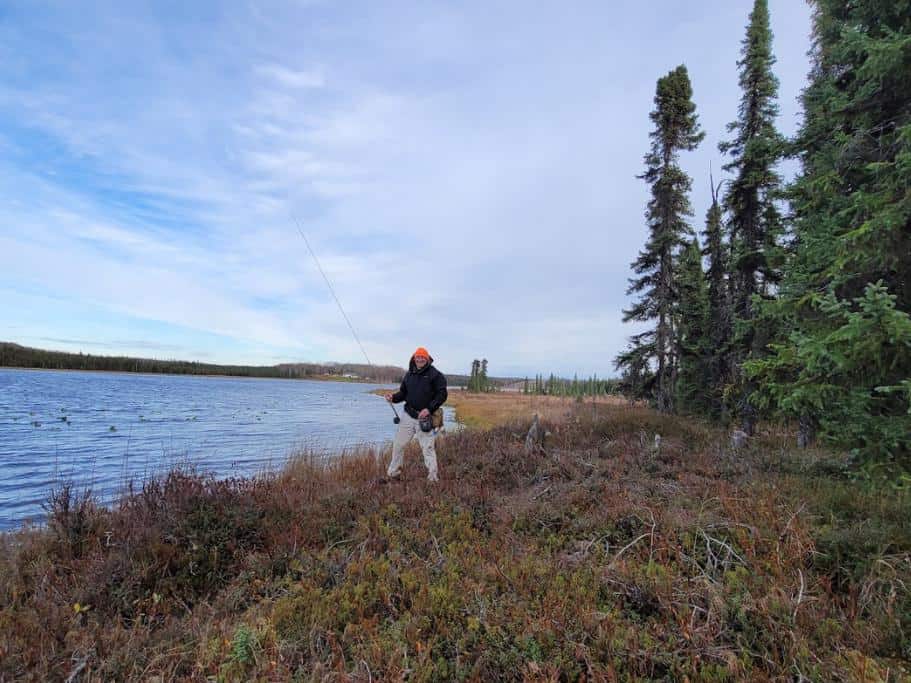
October typically marks the end of the fishing season, but you can still try your luck at catching rainbow trout or steelhead in local rivers and lakes on the Kenai Peninsula.
It won’t be late enough in the season yet for ice fishing in Fairbanks, but if you have one of those travel fishing rods, you might as well bring it and see what you can catch.
Just make sure to check fishing regulations and pick up your license before casting a line!
8. Practice Your Photography Skills
With the beautiful fall foliage and potentially early snowfall, October is an excellent time for landscape and wildlife photography in Alaska. We actually broke into the world of photography while living in Ridgeway in October when we were seeing herds of caribou almost daily near our home.
Alaska is one of those places that if you’re visiting and have been debating splurging on expensive piece of camera equipment, do it! We always say how we regret not having a camera sooner, so don’t make the same mistake we did and miss out on some great photo opportunities.
9. Indulge in Some Wild Game and Seafood
After a season full of fishing and hunting, every restaurant will be stocked to the brim with halibut, salmon, and of course – king crab legs! Local reindeer sausage and elk meatballs are also popular choices, but you can find all of this year-round for the most part. It just all tastes a bit better when there’s a chill outside and a roaring fire inside!
We also love a good pint of ale and you’ll find the state’s breweries are full of primarily locals come fall. They’re a great place to chat with some local guides and some sourdoughs willing to share some unique stories of their time living in Alaska!
10. Look for Wildlife
While the summer months of June through August are technically the best time for seeing wildlife in Alaska, that doesn’t mean you won’t see anything come fall.
We actually often see more moose between September and December than we do in the summer months, but it really depends on where you visit and how lucky you get!
Go for a road trip along major highways and through rural neighborhoods and you’re likely to come across a moose, coyote, fox, bald eagle or caribou.
FAQ
In this last section, you’ll learn about cruising to Alaska in the fall, more about the weather, and some of our expert advice!
Is October a Good Time to Travel to Alaska?

October can be a great time to visit Alaska, especially if you’re prepared for the colder weather and shorter daylight hours!
October offers opportunities to witness the stunning northern lights, enjoy the last of the fall colors, and participate in various outdoor activities. It’s also a time to enjoy Alaskan cuisine featuring fresh harvests and the catch from the fishing season.
However, it’s crucial to pack warm clothing and plan your trip carefully as the weather can be unpredictable with a mix of fall and winter conditions.
It’s also not the prime time to go bear viewing in Lake Clark or Katmai National Park, so if that’s high on your Alaskan bucket list, you might want to consider visiting in the summer months.
Will I See the Northern Lights in Alaska in October?
It is certainly possible to see the northern lights in Alaska in October! In our experience, we found the months of December and January to be the prime time for aurora viewing, but overall, October is actually one of the best months for viewing the northern lights in Alaska due to the longer nights and clearer skies.
The further north you go, the better your chances of seeing them with prime locations including Fairbanks and the Denali National Park area.
Is It Too Cold in Alaska in October?

Alaska in October can be quite chilly with temperatures dropping below freezing, but we don’t think it’s too cold at this time. Generally, you can expect average highs ranging from 40°F (4°C) to 50°F (10°C) and lows dropping to around 30°F (-1°C) or lower in the evenings.
In northern regions and higher elevations, the temperatures may dip even further, but if your goal is to see the northern lights or save some money on traveling to Alaska, then you’ll need to visit around this time or in the spring.
If you’re worried about it getting too cold during your trip, your best option is to avoid visiting in the winter months when negative temperatures are quite common and snowy, icy conditions are the norm!
Can You See Glaciers in Alaska in October?
Yes, you can definitely see glaciers in Alaska in October. The state is home to over 660 named glaciers and many of them are accessible in October, but whether or not you can walk on them will depend on their stability and if local tour companies are allowing guided tours.
Popular sites like Mendenhall Glacier in Juneau or Matanuska Glacier near Anchorage are typically accessible and offer spectacular views!
Is October Too Late for an Alaskan Cruise?
Unfortunately, most Alaskan cruises stop departing in mid-September, so you may have a difficult time finding a cruise ship with sales scheduled for October.
This is due to the changing weather conditions and the increased likelihood of encountering rough seas throughout the Inside Passage. Besides, many of the businesses and restaurants in port towns start to close down for the winter starting at the end of August, so you wouldn’t be able to enjoy the ports as much.
If you’re flexible with your travel dates and don’t mind the colder weather, you may still find a cruise that operates in late September! You should just be prepared for a different kind of Alaskan cruise experience.
Is Alaska Snowy in October?
Alaska can indeed see snowfall in October, particularly in the northern regions and higher elevations.
Alaska is a massive state and very geographically diverse, so weather patterns can vary significantly from place to place, but there’s a good chance that you’ll see some snow if you visit in the fall.
In the southern coastal areas and the rainforest of Southeast Alaska, you’ll likely see more rain than snow in October, but you’ll still probably see some snow on the mountains!
↪️We lived on the Kenai Peninsula in October and had about 2 feet of snow in our yard by the end of the month.
Can You See Wildlife in Alaska in October?

Yes, it is still possible to see wildlife in Alaska during October, although it might be a bit more challenging to find them.
Many animals start moving inland or migrating south during for the colder months, but you can often still see some moose as they are active year-round, with September through October being the primary rutting season for them.
Bears aren’t true hibernators, meaning they may wake from their deep slumber to search for food, so it’s unlikely you’ll come across them unless you’re deep in the woods on a hiking trail.
In the oceans, you might still be able to see sea otters, seals, and even whales! It is less common, but there’s always a chance.
Can You Go to Denali in October?
While you can technically visit Denali in October, there will be a ton of limitations in October. The park is open year-round, but many facilities close or reduce their hours after mid-September (or after the first snowfall).
The Denali Park Road, the only road in the park, is open as far as the Savage River (mile 14) for personal vehicles, however, the road isn’t maintained. Snow, ice, and debris will not be removed from the road until May, so you may not be able to drive past the park entrance which would deem your visit unsuccessful.
Beyond that point, the road is closed to vehicle traffic during winter and only open to authorized park traffic in summer. Despite these restrictions, for adventurous and winter-ready visitors, Denali in October presents an opportunity to experience the park’s rugged beauty in a serene, snow-covered landscape.
Always check the Denali National Park website for the latest information and advisories before planning your visit.
What is the Worst Time to Visit Alaska?
The “worst” time to visit Alaska largely depends on what you’re hoping to see and do during your visit.
If you’re eager to experience the Alaskan wilderness, see wildlife, and participate in outdoor activities like hiking or fishing, then the winter months (November through March) could be classified as the “worst” time to visit.
However, if your main goal is to see the northern lights or enjoy winter sports like skiing or ice fishing, then summer could be quite problematic for you.
There’s no “worst” time to visit Alaska in general, but depending on what you want to do while you’re there, one season may be better than another.
Alaska has something to offer all year round, and autumn is no exception. While some areas may be inaccessible or have limited services due to the changing weather, many popular tourist destinations are still accessible and offer unique experiences during this time and you can save a ton of money on your trip!
From the stunning northern lights to magical winter wonderland scenes, visiting Alaska in October can be an unforgettable adventure.
If this will be your first time heading to the 49th state, be sure to read this Essential Guide to Traveling to Alaska!


