
18 Best Hiking Trails in Anchorage (Difficulty, Map, & Tips)

When it comes to easy access to the outdoors, few cities can compete with Alaska’s largest city. With mountains, forests, and coastal views all within city limits, the hiking trails in Anchorage are some of the best we’ve explored in the state!
Sean and I have spent countless weekends on the trails around Anchorage from climbing up Flattop for sunset views, walking the wetlands at Potter Marsh, and winding through moose territory in Kincaid Park. We’ve bumped into our fair share of wildlife and found that it doesn’t matter if you’re in a city, you can always find some amazing hiking trails around Alaska.
In this guide, we’ve shared our favorite hiking trails in Anchorage. From easy neighborhood loops to more challenging climbs with incredible payoffs. Whether you’re new to the area or just looking for a fresh trail to try, there’s something here for every kind of hiker!
Best Hiking Trails in Anchorage Alaska
1. Potter Marsh Boardwalk Trail
This is one of the most relaxing and scenic spots to stretch your legs in Anchorage, especially if you’re short on time or hiking with little ones. We’ve hiked it with everyone young and old, and often spot bald eagles on the metal tower overlooking the marshlands so bring binoculars!
The boardwalk winds through a wetland sanctuary, offering views of waterfowl, salmon in the stream below, and sometimes even moose grazing in the reeds. It’s flat, easy, and close to the Seward Highway which is perfect for birdwatchers or a peaceful break from the city bustle.
- Difficulty: Easy
- Roundtrip Distance: 1.2 miles
- Total Hiking Time: 30–45 minutes
- Route Type: Out and back
✅ Google Map View
2. Earthquake Park Loop
Earthquake Park sits on land that dramatically collapsed during the 1964 Good Friday Earthquake, one of the most powerful quakes ever recorded with a magnitude of 9.2.
The forested trail loops through the very ground that dropped nearly 2.5 meters in a matter of minutes, creating a series of deep cracks, ridges, and uneven terrain that are still visible today.
The trail itself is gentle and well-maintained, making it a favorite for families, visitors, and anyone interested in learning more about Anchorage’s seismic past. You’ll also find interpretive signs along the way, plus great views of Cook Inlet and on clear days, Denali!
- Difficulty: Easy
- Roundtrip Distance: 1.5 miles
- Total Hiking Time: 30–45 minutes
- Route Type: Loop
✅ Google Map View

3. Campbell Creek Trail
Winding through residential areas, wooded parks, and along the creek itself, this paved greenbelt is a local favorite for casual hikes and bike rides. You might spot moose along the way, especially in early morning or evening hours. Fox sightings have also been reported.
The full trail stretches quite a distance, but you can hop on and off at various access points to tailor it to your time and energy!
- Difficulty: Easy
- Roundtrip Distance: Up to 15 miles (choose-your-own-distance)
- Total Hiking Time: 1–4 hours
- Route Type: Out and back
✅ Google Map View
4. Tony Knowles Coastal Trail
This iconic Anchorage trail offers some of the best views in the city. It hugs the coastline from downtown all the way to Kincaid Park, passing through forests, beaches, and open bluffs along the way.
Watch for moose, eagles, and the occasional beluga whale out in the inlet. It’s great for both walking and biking, with plenty of places to stop and soak in the scenery. Just keep to the right if you’re moving slow since bicyclists are known to move pretty fast on this trail!
- Difficulty: Easy
- Roundtrip Distance: 22 miles (full trail)
- Total Hiking Time: 4–6 hours (walk, or bike it in 2–3)
- Route Type: Out and back or point to point
✅ Google Map View
5. Kincaid Park Trails
Kincaid is a vast network of forested trails, coastal viewpoints, and winding loops suitable for every level of hiker.
It’s one of the best places in Anchorage to spot moose (we’ve never visited and not seen a moose!), especially in the fall. Whether you’re in the mood for a short nature walk or a longer loop with sea views, you’ll find something that fits. Some trails are paved, while others offer more of a backcountry feel being made of dirt.
Be sure to climb up the stairs on the Kincaid Chalet for incredible views of the Denali Range on a clear day!
- Difficulty: Easy to Moderate
- Roundtrip Distance: Varies from 1 to 10+ miles
- Total Hiking Time: 30 minutes to 3+ hours
- Route Type: Loop and out and back options
✅ Google Map View
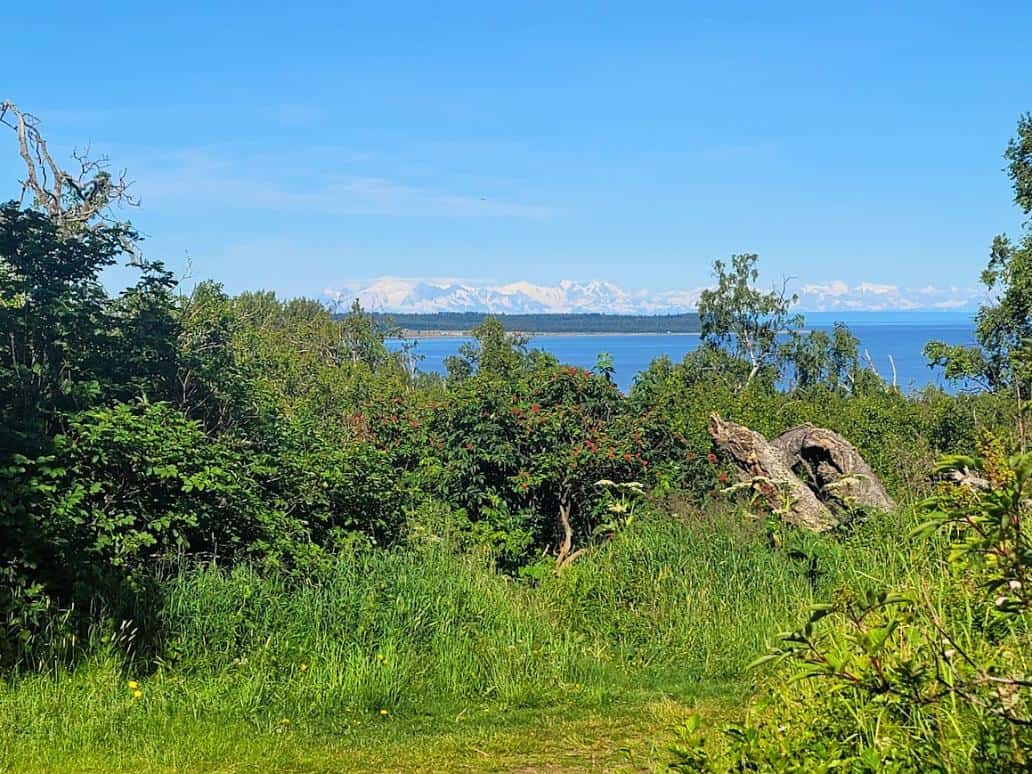
6. Powerline Pass (Lower Section)
Beginning from the Glen Alps trailhead, the lower part of Powerline Pass is wide and mellow with rolling hills and incredible views of the surrounding mountains.
It’s a great intro to Chugach State Park and perfect for hikers who want to go a little farther without steep elevation gain. Expect to see moose and possibly bears, especially in the summer.
- Difficulty: Moderate
- Roundtrip Distance: Up to 10 miles (turn around when ready)
- Total Hiking Time: 2–4 hours
- Route Type: Out and back
✅ Google Map View
7. Little O’Malley Peak
This trail branches off from Powerline Pass and climbs steadily through forest and open tundra until you reach a rocky ridgeline with panoramic views of the valley and surrounding peaks.
It’s not too technical, making it a great option for those wanting a scenic summit experience without the time commitment of a full mountain climb.
Bonus: Wildflowers in the summer are incredible and it’s usually one of the first trails to dry at the start of summer!
- Difficulty: Moderate
- Roundtrip Distance: 3.5 miles
- Total Hiking Time: 2–3 hours
- Route Type: Out and back
✅ Google Map View
8. Rabbit Lake Trail
A local favorite for a reason, this trail follows a gradual incline through a stunning alpine valley to reach Rabbit Lake, tucked between craggy peaks.
The scenery is expansive and dramatic, especially once you clear the forested section. The trail can get muddy after rain, and it’s often snow-covered into early summer, so check conditions before heading out.
➡️ Pro Tip: This hike is very popular, so get there early for a parking spot!
- Difficulty: Moderate
- Roundtrip Distance: 8.6 miles
- Total Hiking Time: 3–5 hours
- Route Type: Out and back
✅ Google Map View
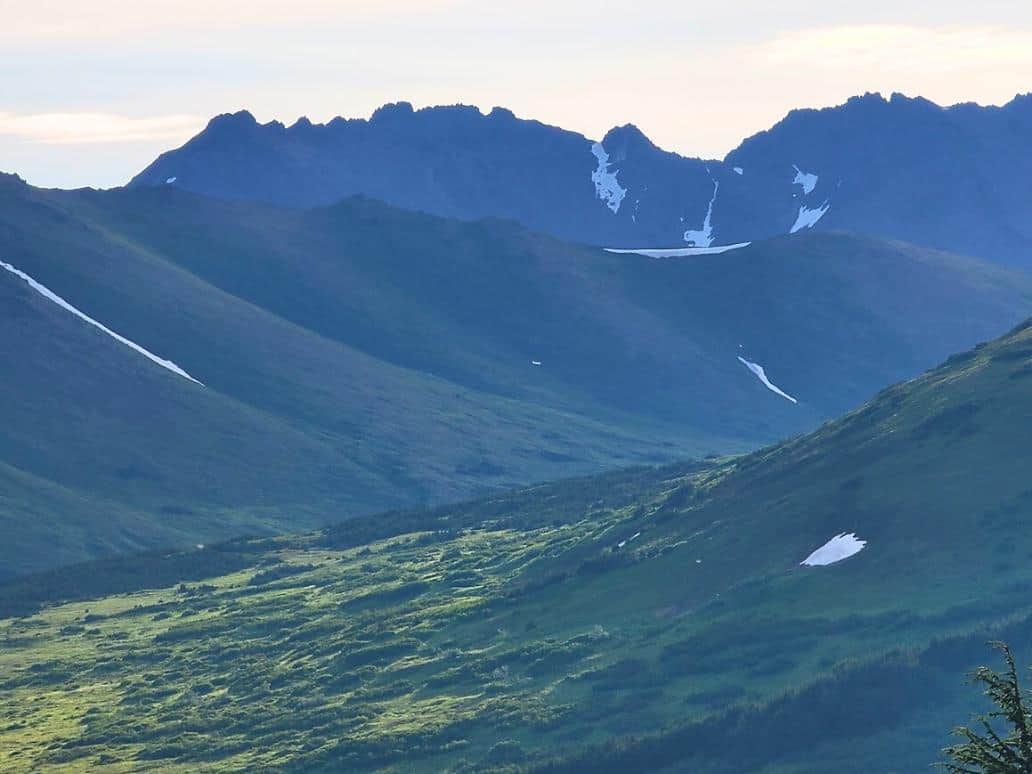
9. Wolverine Peak (to the ridge)
Even if you don’t plan to summit, the hike to the ridgeline offers incredible views and a solid workout. The trail starts in the forest, then opens up to wide tundra slopes with views across the Anchorage Bowl.
Wildlife is common from moose, marmots, and even the occasional bear, so bring your bear spray and stay alert. It’s also a fantastic place to watch the sunset!
- Difficulty: Moderate
- Roundtrip Distance: 5 miles (to ridge)
- Total Hiking Time: 3–4 hours
- Route Type: Out and back
✅ Google Map View
10. Near Point Trail
This trail doesn’t get the same attention as some of the bigger peaks, but it offers one of the best views of the city and Chugach Range for the effort.
It’s steep and steady with about 2,100 feet of elevation gain winding through dense forest before popping out above the tree line. You’ll definitely feel the burn on this one, but it’s well worth the sweat! Some hikers have noted that the trail can get overgrown, so wear long pants if you don’t want the brush rubbing against your legs.
- Difficulty: Moderate to Hard
- Roundtrip Distance: 7.4 miles
- Total Hiking Time: 4–5 hours
- Route Type: Out and back
✅ Google Map View
11. Flattop Mountain Trail
Flattop is easily Anchorage’s most popular hike, and it’s popular for a reason! The trail is short but steep, climbing quickly to a rocky summit requiring a short rock scramble with sweeping views of Cook Inlet, Anchorage, and even Denali on a clear day.
The final scramble to the top is a bit tricky, but manageable with care. You can and should expect crowds on the weekends, and make sure you have $5 in cash with you for parking at the Glen Alps Trailhead.
- Difficulty: Hard
- Roundtrip Distance: 3.3 miles
- Total Hiking Time: 2–3 hours
- Route Type: Out and back
✅ Google Map View
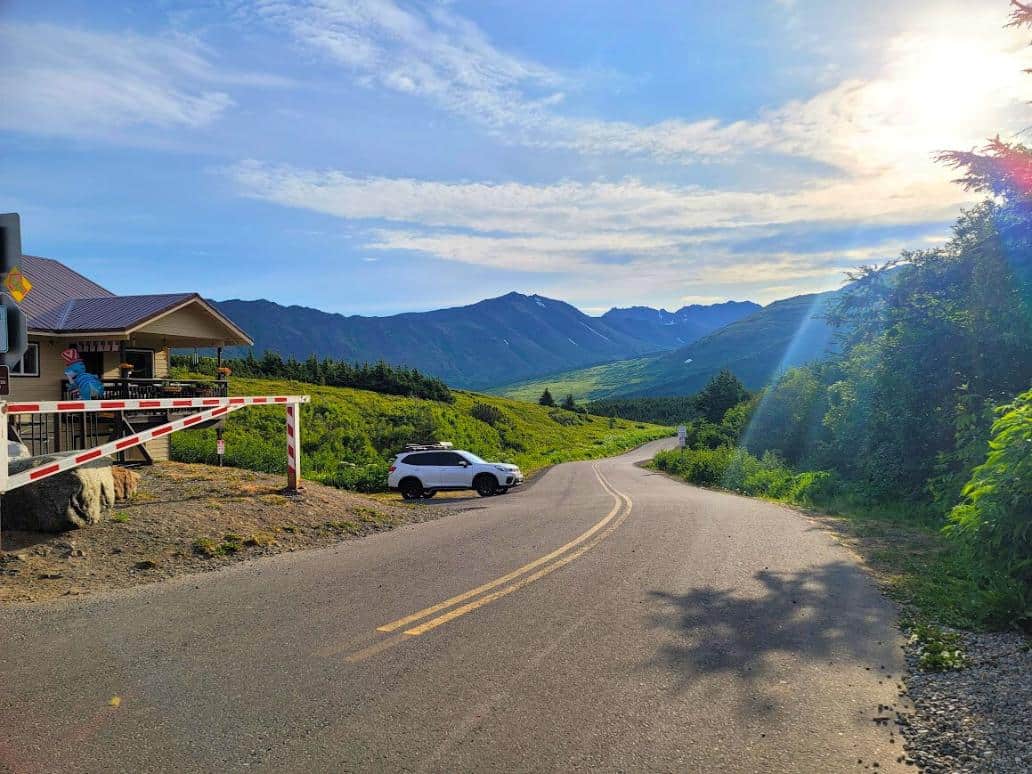
12. Wolverine Peak (full summit)
This full ascent takes you high into the alpine zone for panoramic views and a serious sense of accomplishment.
It’s a challenging climb, especially in the final stretch with 3,500 feet of elevation gain, but you’ll be rewarded with solitude and a front-row seat to the vast Chugach backcountry. Bring layers, it can get windy and cold near the top even in summer!
- Difficulty: Hard
- Roundtrip Distance: 9.4 miles
- Total Hiking Time: 5–7 hours
- Route Type: Out and back
✅ Google Map View
13. Hidden Lake Trail
Less traveled but incredibly scenic, this trail leads to a quiet alpine lake nestled in a remote corner of Chugach State Park. The hike is quite flat for the first 75% but then gets quite steep for the last mile or so.
It also feels much more remote than many other hiking trails in Anchorage on this list. It’s a good pick for experienced hikers looking to escape the crowds and enjoy a peaceful, rugged landscape!
- Difficulty: Hard
- Roundtrip Distance: 5.5 miles
- Total Hiking Time: 3–4 hours
- Route Type: Out and back
✅ Google Map View
14. Bird Ridge Trail
Though technically just outside Anchorage, Bird Ridge is a must for serious hikers visiting the area. The trail climbs steeply from the Seward Highway with nonstop elevation gain and jaw-dropping views over Turnagain Arm once you reach the top!
It’s a quad-burner, but the ridgeline rewards you with epic photos and alpine vibes all the way. Be sure to bring hiking poles since muddy, slippery conditions are common and bear spray is an absolute must in the area.
- Difficulty: Hard
- Roundtrip Distance: 5.5 miles
- Total Hiking Time: 3–5 hours
- Route Type: Out and back
✅ Google Map View
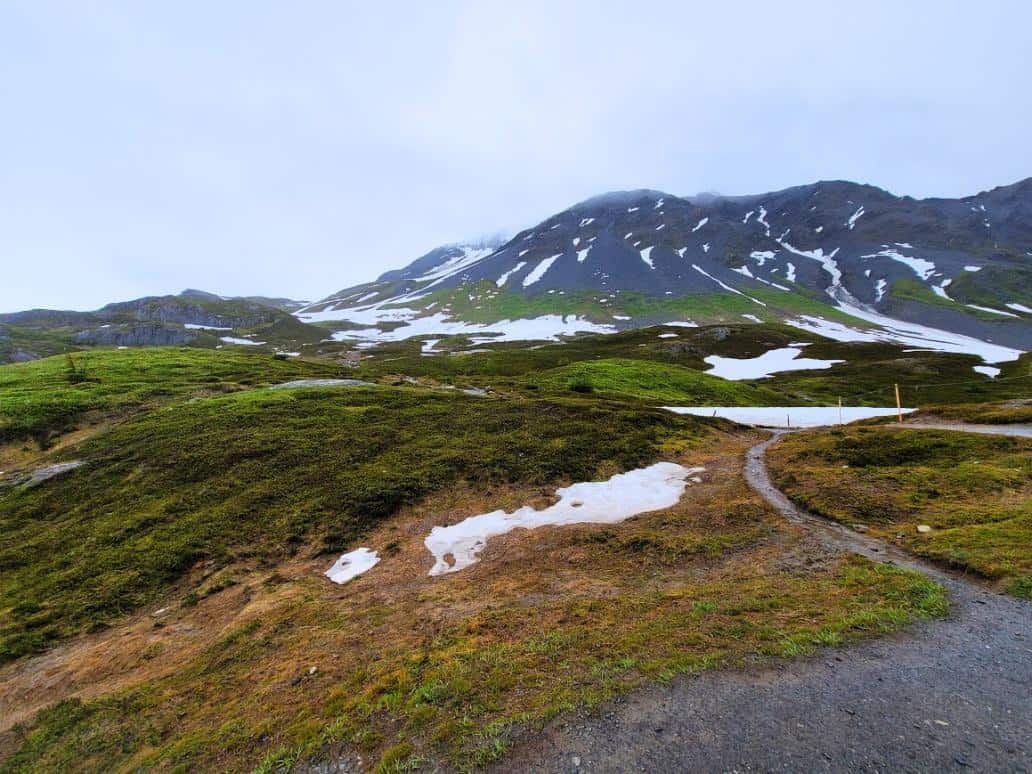
15. South Fork Eagle River Trail to Symphony Lake
This is one of the most beautiful long hikes near Anchorage. The trail rolls gently through a massive U-shaped valley, crossing streams and open tundra before reaching the twin turquoise lakes at the end.
It’s a full-day hike, but the terrain isn’t technical, just long and incredibly scenic the whole way. There’s only about 1,500 feet of elevation gain covering the entire distance, so it’s nice and steady for endurance hikers!
- Difficulty: Hard
- Roundtrip Distance: 12 miles
- Total Hiking Time: 6–8 hours
- Route Type: Out and back
✅ Google Map View
Anchorage Hikes with Waterfalls
16. McHugh Creek Trail (McHugh Falls)
Located just off the Seward Highway south of Anchorage, McHugh Creek is a scenic rest area with a short trail that leads to views of McHugh Falls.
The waterfall isn’t massive, but it’s beautiful, especially after rain or snowmelt, and it’s only a few hundred feet from the parking area so it’s definitely worth checking out! There are also longer hiking options that connect to the Rabbit Lake and Turnagain Arm trails, but the ty
- Difficulty: Easy to Moderate
- Roundtrip Distance: 1–8 miles (depending on route)
- Total Hiking Time: 30 minutes to 3 hours
- Route Type: Out and back or loop options
✅ Google Map View
17. South Fork Eagle River Trail (waterfalls along the way)
This is the same trail I mentioned above, but if you go all the way to Symphony Lake, you’ll pass several small cascading waterfalls as you move through the alpine valley! None are giant, but the combination of tumbling water, lush greenery, and sweeping views makes it a magical experience, especially in June and July.
- Difficulty: Moderate to Hard
- Roundtrip Distance: 12 miles
- Total Hiking Time: 6–8 hours
- Route Type: Out and back
✅ Google Map View
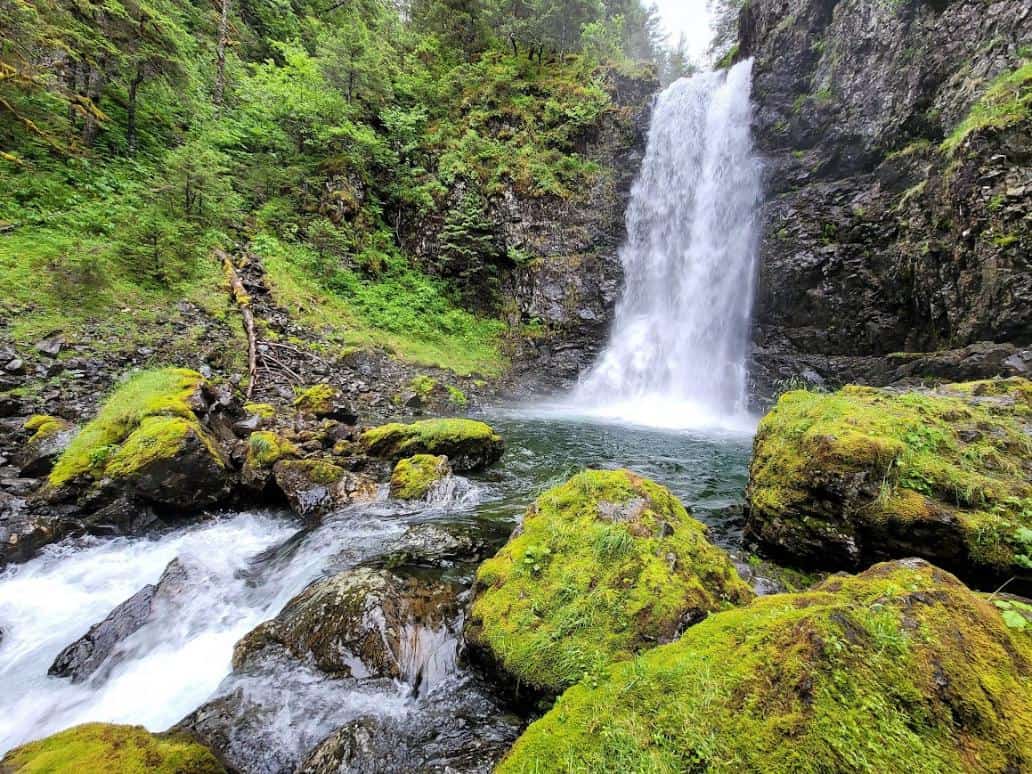
18. Falls Creek Trail (Hidden Waterfall Bonus!)
Just south of Anchorage on the Seward Highway, Falls Creek Trail offers a steep climb with gorgeous views and a hidden waterfall early in the route. The falls are best viewed in early summer and can be missed if you don’t take the short spur trail, so keep an eye (and ear) out!
➡️ Pro Tip: This trail also has frequent reports of bear sightings, so having bear spray reachable, bear bells on your pack, and keeping limited food on your person are all good ideas. It can also get quite overgrown, so take a look at recent reports of the trail before you head out.
- Difficulty: Hard
- Roundtrip Distance: 5 miles
- Total Hiking Time: 2–4 hours
- Route Type: Out and back
✅ Google Map View
Hiking Trails in Anchorage Map
To help you plan your next adventure, we’ve put together a custom map with all 15 of these hiking trails in and around Anchorage. You can use this map to see trailhead locations, driving distances, and route details at a glance.
We do want to mention that this list is not all-inclusive, so you may find other hiking trails in the area that you want to check out! Save it for offline use or pull it up on the go.
Tips for Hiking Near Anchorage, Alaska
1. Be Bear Aware
Anchorage’s trails are true wilderness, even within the city limits. Always carry bear spray, hike in groups when possible, make noise as you go (talking or singing works great), and avoid surprising wildlife.
Know the difference between black bears and brown bears, and brush up on what to do in a bear encounter before you hit the trail. Here’s a great resource from the National Park Service.
2. Give Moose Plenty of Space
Moose are common on trails like Kincaid Park, Campbell Creek, and even the Coastal Trail. They might look chill, but they can be unpredictable, especially if they have calves or feel cornered.
Give them at least 25 yards of space and never try to go around a moose on a narrow trail. Wait it out, they usually move on.
3. Dress in Layers (Always)
Even if it’s sunny and warm when you start, weather in Anchorage can change quickly, especially in the hills or along the water. Bring layers you can add or shed, including a waterproof jacket, light gloves, and a warm hat, even in summer.
A puffy jacket is never a bad idea up high.
4. Start Early for Fewer Crowds (and Better Wildlife)
Trails like Flattop and the Coastal Trail can get busy, especially on weekends. Starting early not only helps you avoid the crowds, but it also increases your chances of spotting wildlife when things are quieter.
5. Pack Bug Spray
Mosquitoes are no joke in summer – I’m talking the size of quarters.
Especially on forested trails and near wetlands like Potter Marsh or Campbell Creek, you’ll want to bring a good DEET-based repellent or a natural alternative if you prefer, and consider wearing long sleeves and a head net if you’re hiking in June or July.
6. Bring Plenty of Water
Even if the hike seems short, bring more water than you think you’ll need. Most Anchorage-area trails don’t have water sources you’d want to drink from without a filter or purifier.
Plus, the air is dry and you’ll likely sweat more than expected on sunny days or climbs.
7. Tell Someone Where You’re Going
Especially on longer hikes or anything in Chugach State Park, always let someone know your planned route and return time. There’s cell service in parts of the city, but it can disappear quickly once you’re in the mountains.
Also, if there’s a sign-in sheet at the trailhead, fill it out! Park rangers do check these, so it’s important to do before you head up the trail.

8. Download Maps or Bring a Printed One
Trails like Rabbit Lake, Near Point, or Wolverine Peak can have unmarked side trails or confusing intersections.
Use apps like AllTrails, Gaia, or OnX, but make sure you download the map for offline use, or carry a paper map if you’re heading deeper into the park.
9. Watch the Weather, Especially in the Hills
It might be sunny in town and storming in the foothills. Always check the weather for Glen Alps or Arctic Valley specifically if you’re hiking in those areas. Fog can roll in fast and drop visibility to near zero at higher elevations.
10. Bring Trekking Poles on Steeper Hikes
For trails like Flattop, Bird Ridge, or Near Point, trekking poles can help take pressure off your knees, especially on the descent. They also help with balance on slick or rocky terrain.
11. Don’t Rely on Trail Signs Alone
Some Anchorage-area trails are very well marked, but others, especially those in Chugach State Park, have minimal signage. Trust your map and route research more than the signs, and don’t assume you’re on the right path just because it’s well-trodden.
12. Expect Mud or Snow – Even in Summer
Trails like Rabbit Lake, Falls Creek, or any that gain elevation can still have snow into June or even July. Lowland trails can stay muddy well into summer too.
Waterproof hiking boots and gaiters are great to have on hand!
13. Pack Snacks (and Maybe Bear-Resistant Storage)
It’s easy to underestimate how long a hike will take when the views are this good. Bring snacks or a light meal, especially for longer outings. If you’re camping or hiking in remote areas, use bear-proof containers for any scented items.
14. Respect Wildlife and Leave No Trace
Don’t feed animals, don’t leave food behind, and don’t trample off-trail, especially in sensitive alpine tundra. Anchorage’s trails are wild and beautiful, and they’ll stay that way if we all do our part.
15. Know Your Limits
It’s easy to get caught up in the excitement of hiking in Alaska, but always hike within your skill level. Trail distances and elevation gain here can be deceiving, and what looks like a short hike on a map might be much more demanding in real life.
FAQ
What is the most popular hike in Anchorage?
Flattop Mountain is by far the most popular hike in Anchorage, and maybe even all of Alaska.
It’s short, steep, and leads to incredible panoramic views over the city, Cook Inlet, and on clear days, even Denali. Because of its easy access and unbeatable summit views, it sees heavy foot traffic year-round, especially in summer and on clear weekends.
If you want to hike Flattop, get to the Glen Alps Trailhead before 7:30AM to secure parking. Otherwise, you may be parking at the bottom of the hill and paying $25 for the shuttle!
Is Anchorage good for hiking?
Anchorage is one of the best cities in the U.S. for hiking! With over 200 miles of trails, access to Chugach State Park, coastal routes, forest walks, and alpine summits all within a short drive (or even walking distance) from downtown, it’s a dream for outdoor lovers.
Whether you’re looking for a gentle stroll or a full-day trek, Anchorage has a trail for it.
How long is the hike to Thunderbird Falls?
The hike to Thunderbird Falls is a popular and easy outing located just north of Anchorage near Eagle River.
The trail is about 1.8 miles roundtrip and takes most hikers 30 to 60 minutes to complete. It’s mostly flat with a few rolling hills, and the reward is a beautiful viewing platform overlooking a 200-foot waterfall surrounded by lush forest.
What should I pack for the hiking trails in Anchorage, AK?
Weather in Anchorage can change quickly, even in summer, so it’s best to pack like you’re heading into the mountains (because you probably are).
Always bring layers, including a lightweight rain jacket, a warm fleece or puffy, and moisture-wicking base layers. Sturdy hiking shoes are a must, even on shorter trails, since you may encounter mud, rocks, and uneven terrain.
Other essentials include:
➡ Bear spray (and know how to use it!)
➡ Bug spray (mosquitoes are fierce in summer)
➡ Water and snacks or a packed lunch
➡ Sunscreen and sunglasses
➡ A map or GPS, especially on longer or lesser-known trails
➡ Trekking poles for steeper routes like Flattop or Bird Ridge
➡ First aid kit and headlamp for backup safety
Are there bears on hiking trails in Anchorage?
Yes, both black bears and brown bears are commonly seen on trails around Anchorage, especially in areas like Kincaid Park, Powerline Pass, and the hillside trails of Chugach State Park.
That doesn’t mean you should be afraid to hike, but you should always be bear-aware: carry bear spray, make noise, hike in groups when possible, and never approach or feed wildlife.
Keep limited food on your person and ensure your bear spray is reachable (it does you no good if it’s in your backpack!)
Do I need a permit to hike in Anchorage?
For most city trails and casual hikes, no permit is required. However, some areas in Chugach State Park may require a $5 day-use parking fee or an annual pass if you’re parking at certain trailheads like Glen Alps or Eagle River.
You can check the Alaska State Parks website before you go.
What’s the best time of year to hike in Anchorage?
June through early September is the prime hiking season in Anchorage. Trails are generally snow-free, daylight is nearly endless, and wildlife and wildflowers are abundant.
If you’re visiting outside of those months, you’ll want to check trail conditions on the days leading up to your trek. Many higher elevation hikes are still snow-covered into May or even June, and some can be icy or muddy during shoulder seasons.
We hiked the Exit Glacier Trail in July and ended up having to turn back just a mile from the end when the temperature dropped into the low 20s Fahrenheit and all we had were rain coats with us.
The summers are typically beautiful for hiking near Anchorage, but not always! Keep up-to-date on trail conditions up until the day of your hike.
What wildlife might I see while hiking in Anchorage?
Anchorage’s trails are wild in the best way. Common wildlife sightings include moose, bald eagles, foxes, porcupines, Dall sheep, and yes, bears.
Moose are especially common in areas like Kincaid Park and Campbell Creek. Always keep your distance, make noise, and give wildlife plenty of space. Both bears and moose are likely to become aggressive if startled or are protecting their young.
Are Anchorage trails good for kids or beginners?
Definitely! Trails like Potter Marsh, Earthquake Park, Campbell Creek, and Kincaid Park offer easy, scenic, and family-friendly options.
They’re great for little legs and anyone new to hiking. Many are also stroller-accessible or paved in sections!
Can I hike in Anchorage without a car?
Some trails are accessible right from downtown or by public transit. You can reach the Coastal Trail, Chester Creek Trail, Earthquake Park, and parts of the Campbell Creek Greenbelt without needing to drive.
For hikes in the Chugach foothills or places like Flattop and Powerline Pass (i.e. the bigger hikes), however, you’ll need a car or rideshare, as public transit doesn’t service those areas directly.
After years of hiking all over Alaska, from deep in the Arctic to remote coastal trails, we can confidently say that Anchorage offers some of the most accessible and rewarding hiking in the state.
Whether it’s a casual evening walk along the Coastal Trail or a steep scramble up Flattop to catch the midnight sun, these trails have become part of our everyday life and some of our favorite memories.
With so many options just minutes from downtown, Anchorage is the kind of place where you can grab your gear and hit the trail on a whim, knowing you’ll be surrounded by mountains, wildlife, and that unbeatable Alaska air.
We hope this guide helps you discover a few new favorites of your own, and gives you the confidence to explore more of the amazing hiking trails in Anchorage.
Up next, check out these 32 Non-Touristy Things To Do in Anchorage Alaska!


