
How Cold is Alaska? Weather by Region in the 49th State

How cold is Alaska? Do average temperatures actually drop into the negatives? They sure do! When it comes to planning a trip to Alaska, regardless of the time of year, understanding what weather to expect is imperative.
Not only so you can pack efficiently, but also for your own safety. We’ve lived in almost every region of Alaska at this point, in both the summer and winter months, and we’re here to answer all of your weather-related questions about Alaska!
With temperatures ranging from -55°F to 95°F, Alaska offers one of the most extreme climate ranges in the entire world. The weather varies dramatically between regions like Juneau compared to Fairbanks, so it’s important to keep this in mind when planning your trip up north.
In this post, we teach you about the coldest regions of Alaska and how to prepare for them, provide Alaska’s typical weather by region, and include some of our personal experiences and advice for braving the extreme chill of The Last Frontier!
How Cold Does It Get In Alaska?
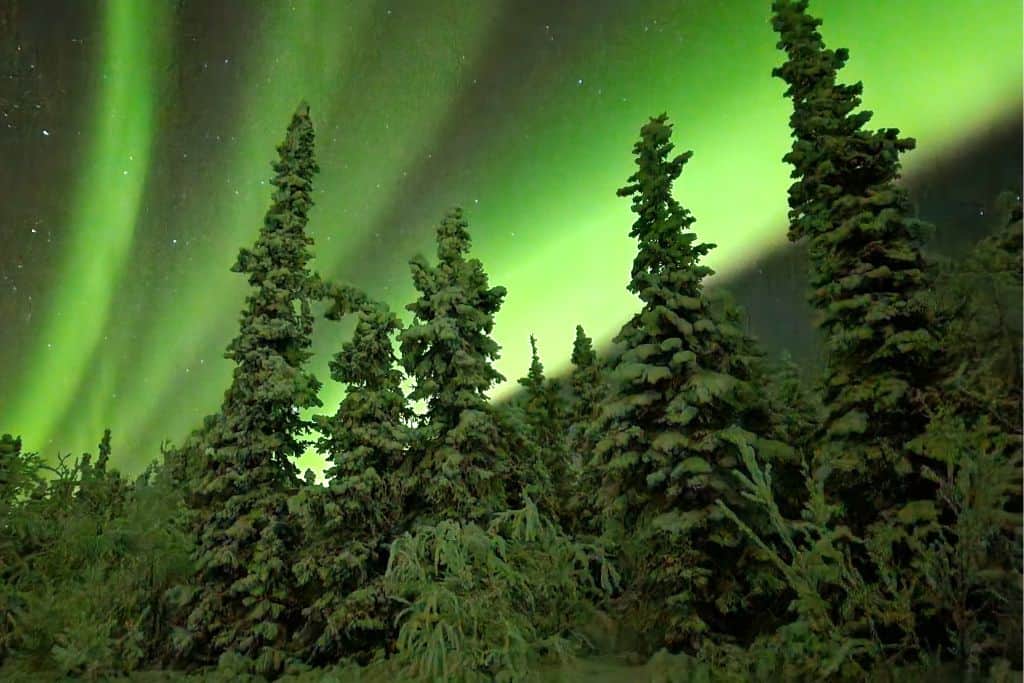
Alaska gets extremely cold with temperatures dropping as low as -55°F in the winter months in Fairbanks. We joke that we’re cold-blooded people because we found this to be the coziest time of year in Alaska!
We’d be the only ones at our local brewery (HooDoo in Fairbanks) enjoying the outdoor firepits while our beers literally froze in our hands as we were drinking them. This is rather typical, however, for Fairbanks and the northern half of the state.
In the southern half of the state between Anchorage and Juneau, however, the weather is less harsh and is actually somewhat comparable to what you’d find in New England.
The weather is notoriously unpredictable and even in the summer months, it’s quite possible to experience all four seasons in a single day! This is largely due to Alaska’s location on the Gulf of Alaska and the Bering Sea, which doubles as one of the top whale-watching regions in the world.
When we first moved to the state, we were chuckled at by some locals for relying on the weather app, unaware that it was the least reliable method for predicting the weather. Everyone else simply walked outside, and brought a variety of layers with them to work anyway!
Moving to Alaska was still one of the best things we’ve ever done for ourselves, but there’s no doubt that the first time you feel that sting on your face from the bitter cold, it’ll leave a lasting impact.
Alaska Weather By Region

Not sure when to visit Alaska because of the unpredictable weather? We get it! The first time we visited Alaska was in July, and I truly thought I could expect warm, sunny weather for the majority of the trip.
While this was true for that travel experience in particular, the following July I experienced weather that I would have expected in March!
To help you get a better idea of what to expect for your own trip, I’ve provided the average summer and winter temperatures for each major region.
All weather data is supplied by U.S. Climate Data.
Juneau
☀️ Average High & Low: 64°F & 50°F
❄️ Average High & Low: 33°F & 24°F
Seward
☀️ Average High & Low: 62°F & 50°F
❄️ Average High & Low: 31°F & 21°F
Anchorage
☀️ Average High & Low: 65°F & 52°F
❄️ Average High & Low: 23°F & 11°F
Fairbanks
☀️ Average High & Low: 73°F & 52°F
❄️ Average High & Low: 1°F & -17°F
Utqiagvik (formerly Barrow)
☀️ Average High & Low: 47°F & 35°F
❄️ Average High & Low: -7°F & -19°F
Real-Life Experiences of Alaska’s Extreme Weather

To give you an idea of what your actual experience may look like depending on when you visit, I’ve provided a few short personal stories below for you.
Summer Story:
I got married in Seward, Alaska on the Kenai Peninsula in July and was fortunate enough to receive a beautiful, 65°F sunny day, but in the weeks prior and following the wedding day, it was about 40°F and monsoon status.
I’m talking 30+mph winds on the daily, 20+ footers out on the ocean, and sleet was the typical precipitation.
To put this in perspective, July is supposedly Alaska’s sunniest month… it was only sunny for about 5 days of the entirety of the month in 2022.
The weather stayed this way until it finally started to let up in October.
Winter Story:
As for the winter months in Alaska’s beautiful interior, I resided just outside the city of Fairbanks. One day on the way to our local post office to pick up some mail, I got out of the car and couldn’t get my keys to work because my gloves were too thick.
I took one off just for a second so I could lock up, and accidentally put my hand directly on the door handle with no glove. Searing, burning pain with no skin left in a matter of seconds.
The pain took my breath away and I actually looked back thinking I stuck my hand in a fireplace.
It was only -25°F that day in December. It got considerably colder as the winter went on, and I didn’t make that mistake again.
FAQ
Is Alaska Colder than Canada?

Both Alaska and Canada boast extreme lows averaging about -80°F, with Canada just breaking this number and reaching -81°F making it slightly colder than Alaska.
Generally speaking, however, these temperatures are quite rare and parts of Alaska and Canada do rival each other in terms of low temperatures, especially during the winter months.
Alaska does boast some of the most extreme cold weather in the United States, particularly in its northern and interior regions. However, Canada, being a much larger country, has numerous areas that experience extreme cold as well, especially in its northern territories and prairie provinces.
Cities like Yellowknife in the Northwest Territories or Winnipeg in Manitoba are renowned for their bitterly cold winters. As is Snag in the Yukon.
While both regions feature extremely cold areas and Canada currently holds the record for the lowest temperatures, whether Alaska is colder than Canada largely depends on the specific locations being compared.
Is Alaska Cold All Year Round?
No, Alaska is not cold all year round consistently, but there are going to be cooler days and nights, regardless of the region of the state, all year round.
Certain months, of course, including September through May typically experience the coldest temperatures throughout the state. However, Alaska is also recognized for its unanticipated warm weather, particularly in the summer months of June through August in some regions.
How Many Months Is Alaska Cold?
Alaska is typically cold for 9 months of the year, between September and May. Of course, there are always exceptions when temperatures may remain respectively high throughout September or may become milder as spring begins to unfold in April.
These months before and after the summer bring in the most unpredictable weather for tourists since weather can be more difficult to predict ahead of time.
Does It Ever Get Hot in Alaska?

Yes, believe it or not, it absolutely does get hot in Alaska! Contrary to popular belief owing to its northernmost location in the United States, Alaska experiences some hot summer days in the months of July and August.
In Anchorage, Alaska’s largest city, summer temperatures have been known to reach up to 80°F during the hottest parts of the day. Denali National Park in the northern interior of the state has had some record-breaking temperature spikes during these months as well, with the climate reaching a staggering 90+°F with humidity!
So, no matter what you hear or read, it’s important to pack at least one T-shirt and a pair of shorts for your visit, particularly if you’re visiting in the summer months.
Does It Snow a Lot in Alaska?
Yes, Alaska receives a significant amount of snowfall, particularly in its mountainous regions. On average, Anchorage can see around 75 inches of snow each year, while areas in the Alaska Range and the coastal mountains can receive hundreds of inches annually.
The town of Valdez, nestled in the Chugach Mountains, is among the snowiest places in Alaska, often accumulating over 300 inches of snow each year.
However, it’s worth noting that snowfall can vary widely across the state, with the Arctic and interior regions experiencing more precipitation and, thus, more snow compared to the southern and coastal areas.
How Cold Is It in Anchorage Alaska?
Anchorage, Alaska typically experiences milder temperatures than the rest of the state and as a result, its coldest months are January and February with an average temperature of around 20°F.
By March and April, temperatures start to creep up over freezing during the daytime when sunlight is present, while still dropping down to lows of 20-28°F at night.
This trend continues into the summer months, with July and August bringing in the main warmth from the sun and raising the average temperatures to between 55-65°F.
Come August and September, cooler temperatures as well as more unpredictable weather patterns start to occur more frequently due to the transition between summer and fall.
↪️ Pro Tip: The word “fall” is a joke to most Alaskans… you’ll primarily hear that Alaska has two seasons: summer and winter. Fall, or autumn, takes place over the course of just a few days or weeks, depending on the region, where the foliage spikes and is then quickly covered by a thick blanket of snow.
Snowfall does occur in the months of September and October, though it usually begins with light dustings before leaving the ground hidden for the next 8 months or so.
How Cold is Alaska in the Winter?

Despite Alaska’s weather being wildly unpredictable, the winter months usually provide a bit more consistency with temperatures between -50°F and 30°F, depending on the region.
Fairbanks and the Arctic interior have the lowest temperatures averaging in the -20s to -30s, while Juneau and the Southeast have milder winters with temperatures in the teens to mid-30s.
But, if you’ll be in Homer at the southernmost tip of the Kenai Peninsula, then you can expect temperatures in the teens or mid-20s throughout most of the winter season.
How Cold is Alaska in July?
If warm weather is on your radar for Alaska, then July is your best bet with average temperatures ranging from the 50s to 70s Fahrenheit.
Again, that’s not to say that you can’t experience torrential downpouring rain, high winds, cloudy or overcast days, and temperatures well below these averages.
Precipitation should be expected and temperatures range massively from day to night. Be sure to pack plenty of layers to account for drastic weather changes!
How Cold is Alaska in August?
August temperatures will range between regions in Alaska, but for the most part, you can expect mild temperatures between 40°F and 75°F.
Water temperatures are also at their highest in the late summer months, with averages in Seward remaining between 43°F and 51°F.
Yes, that’s the “high” ocean temperature in Resurrection Bay! Perfect for polar plunges all year long.
How Cold is Alaska in September?
In September, visitors can expect to experience average high temperatures in the 50s with the average low in the 40s.
September isn’t necessarily a great month to visit Alaska since salmon fishing becomes scarce, temperatures start to drop, the days get shorter, and most wildlife has moved deep into the woods in preparation for the treacherous winter ahead.
It’s one of our favorite times to be in Alaska since the foliage is absolutely out of this world, but for the average tourist who is short on time and wants to squeeze a lot of activities in, it’s not exactly prime season.
How Cold is Alaska on Average?

On Average, Alaska enjoys temperatures between -25°F and 75°F, which may sound drastic but is fairly typical for a state that encompasses such an expansive geographic area (over one-third of the size of the contiguous United States).
No matter what time of the year you plan on traveling to Alaska, make sure to pack some layers!
What is the Coldest Day on Record in Alaska?
The coldest day on record in Alaska is January 23rd, 1971 when the temperature dropped to -80°F (-62.2 °C).
History has shown over time that as much data as we collect, there is always room for exceptions thanks to the drastic temperature changes between the Kenai Peninsula and the Arctic Circle where wild polar bears roam.
How Cold is Alaska in 2024?
In the 2023-2024 winter season, Alaska experienced some strange weather patterns with typical lows rising and average temperatures remaining higher than usual for longer periods of time.
Snowfall has also been less than in previous years, with the snowfall being recorded at 64.1 inches.
Compared to an average of 87 inches in previous years, this has had a significant impact on skiing and other winter activities in the area.
No matter when you plan on visiting Alaska, it’s important to be prepared for all types of weather. While the temperatures range depending on where in the state you are, generally speaking, summers will offer milder climates and winters tend to get seriously cold.
If you’re hoping for warmer weather during your travels, then head south towards the Inside Passage in Southeast Alaska or even head to Denali National Park in the Alaskan interior.
If you’re looking to participate in some epic northern lights tours or go for a snowmobile ride through the Arctic tundra, then winter is a fantastic and brutally cold time to visit!


