
30 Days of Night in Alaska: Polar Nights & Midnight Sun

Is it true that you can experience 30 days of night in Alaska? Where in Alaska do they have 30 days of night?
The spectacle of a polar night exists north of the Arctic Circle where few inhabitants live year-round. Defined by total darkness lasting for a complete 24 hours, this is a truly unique phenomenon that few people will ever experience!
After relocating to Alaska and making our way up the Dalton Highway to the community of Deadhorse in Prudhoe Bay, and spending an entire winter in Fairbanks, we’ve been lucky enough to almost experience complete darkness for a full 24 hours.
In this post, you’re going to learn about the difference between the midnight sun and the polar night, which regions of Alaska experience complete darkness, and have access to a diagram that provides an example of what the midnight sun and polar night look like from space’s perspective!
Are There 30 Days of Night in Alaska?
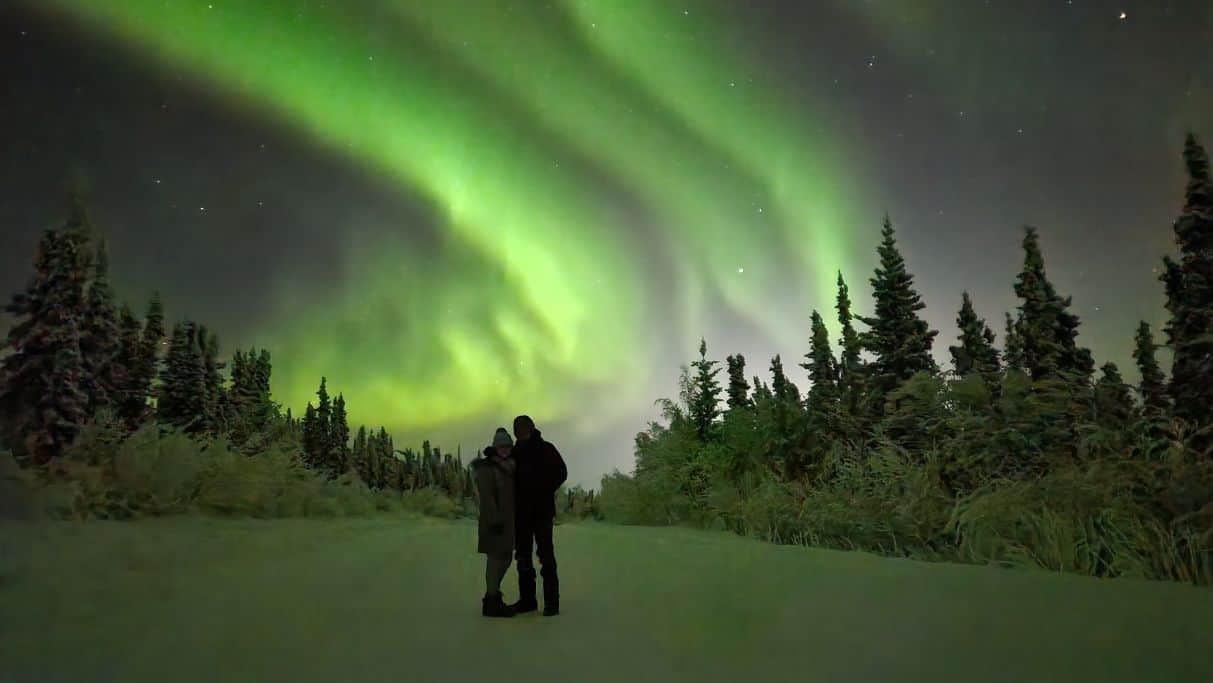
30 days of complete darkness doesn’t occur in most places across the state, but it does exist in just one Alaskan town known as Utqiagvik.
Well known as the northernmost town in the United States and one of the best spots in the world for viewing the northern lights, Utqiaġvik (formerly known as Barrow) experiences extreme weather, particularly in the winter months, with temperatures dropping as low as -56 degrees Fahrenheit which took place back in 1924.
Only reachable by air or sled dog team, Utqiagvik gets very few tourists with the exception of those seeking a once-in-a-lifetime opportunity to spot a wild polar bear on the northern ice caps of Alaska.
Thus, the polar night phenomenon has been seen by extremely few people, minus the brave souls that call this Alaska town their home year-round.
In fact, with the exception of there being a slim chance that the sun will poke through for even just a minute or so, Utqiaġvik actually experiences about 65 days of darkness between December and January annually, with Sat, Dec 21, 2024 being the shortest day of the year during the winter solstice.
Also known as “civil twilight” which is defined by the National Weather Service as when the “geometric center of the sun is 6 degrees below the horizon”, people may see a mere glimpse of sunshine during this time, though it is not considered actual “daylight” unless the sun rises more than 6 degrees above the horizon.
So, yes, you can find complete darkness in Alaska, it’s just extremely difficult to access and few people in the world will ever get to see it.
Alaska Daylight Hours by Month and Region

In this next section, we’ve broken down the number of daylight hours by season in each of the 49th state’s major regions. But, if you spend any amount of time in Alaska, a true sourdough will tell you that there’s really only winter and summer seasons, with spring and fall being a mere hour or two.
Southeast Alaska – Juneau
Winter (defined as October through March)
➡️ 6.5-11.5 hours
Summer (defined as April through September)
➡️ 13.25-18 hours
Southcentral Alaska – Seward

Winter
➡️ 6-11.5 hours
Summer
➡️ 13.5-18.75 hours
Central Alaska – Anchorage
Winter
➡️ 5.75-11.25 hours
Summer
➡️ 13.25-19.2 hours
Northern Interior Alaska – Fairbanks

Winter
➡️ 4-11.25 hours
Summer
➡️ 13.75-21.4 hours
The North Slope – Utqiagvik
Winter
➡️ ~0-11 hours (though we know 0 is by definition, and not necessarily complete darkness lasting 60+ days uninterrupted)
Summer
➡️ ~0-23 hours
Notice how the number of daylight hours drops the further north you go? That’s why Utqiagvik is well known as one of the only places in the world where you can experience the polar night!
Of course, these daylight hours may vary depending on your exact location and the exact day you’re in Alaska, but for the most part, you’ll notice the trend of losing daylight hours the further north you go.
Midnight Sun Diagram
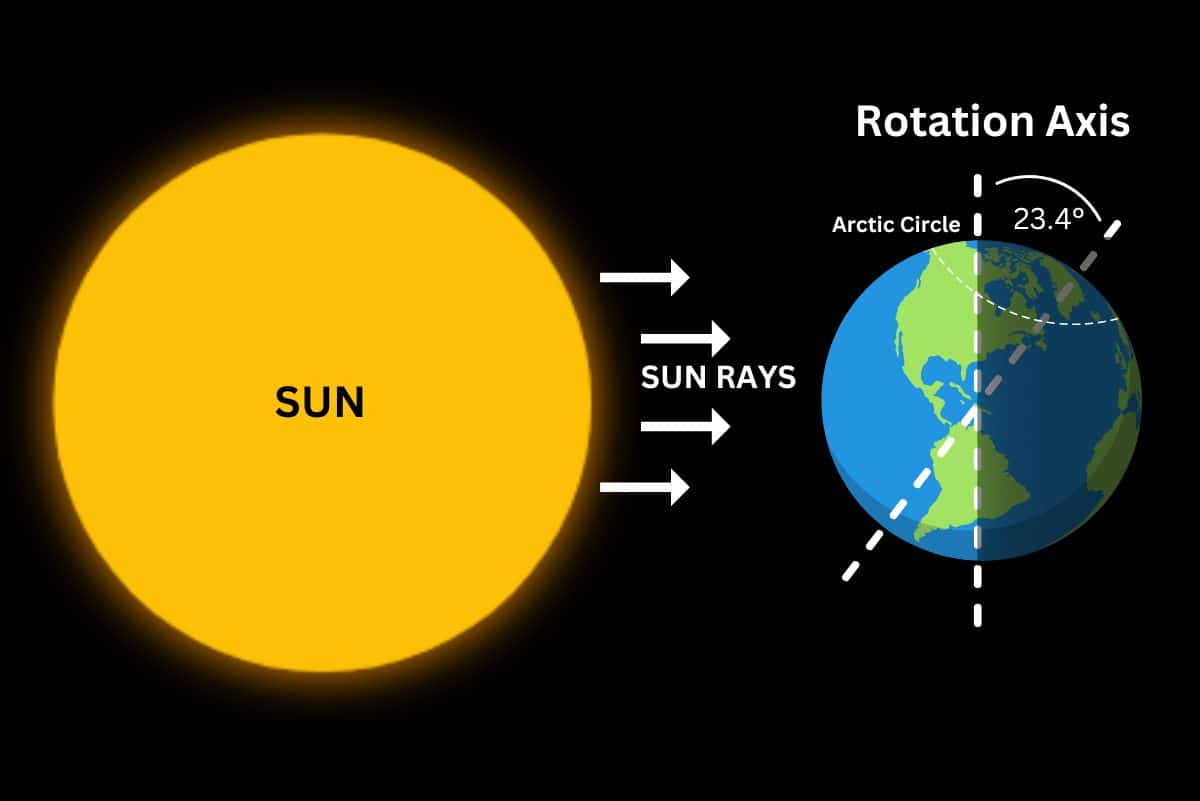
Here is a simple diagram to demonstrate how the Arctic Circle will always remain in either complete darkness or complete sunlight (known as the polar night and midnight sun, respectively).
Now, this diagram is merely an example and the lines are not exact, but you can still see that most of Alaska lies outside of the rotation axis, which means the majority of the state will not experience complete darkness or daylight at any point throughout the year.
FAQ

In this last section, we’ve myth-busted some essential questions regarding Alaska’s days and nights.
Where in Alaska Do They Have 30 Days of Night?
The part of Alaska that has 30 days of night or more is the North Slope Borough.
It’s located deep inside the Arctic Circle and is rarely visited by tourists outside of wildlife photographers and travelers dedicated to seeing polar bears. You can only access this remote region by boat, plane or snow-transport, making it quite difficult (and expensive) to get to.
Why Does Alaska Experience 30 Days of Night?
Alaska experiences 30 days of night, specifically in Utqiagvik, due to its geographical location. It’s situated above the Arctic Circle, a region that experiences polar night.
This phenomenon occurs when the Earth tilts on its axis away from the sun at an angle of about 23.5 degrees during winter, causing the sun to stay below the horizon.
As a result, this region plunges into darkness for approximately two months. However, keep in mind that “night” doesn’t mean absolute darkness. There’s still an ethereal twilight around midday that lends a unique ambiance to the Alaskan winter landscape.
Does Alaska Have 6 Months of Day and 6 Months of Night?
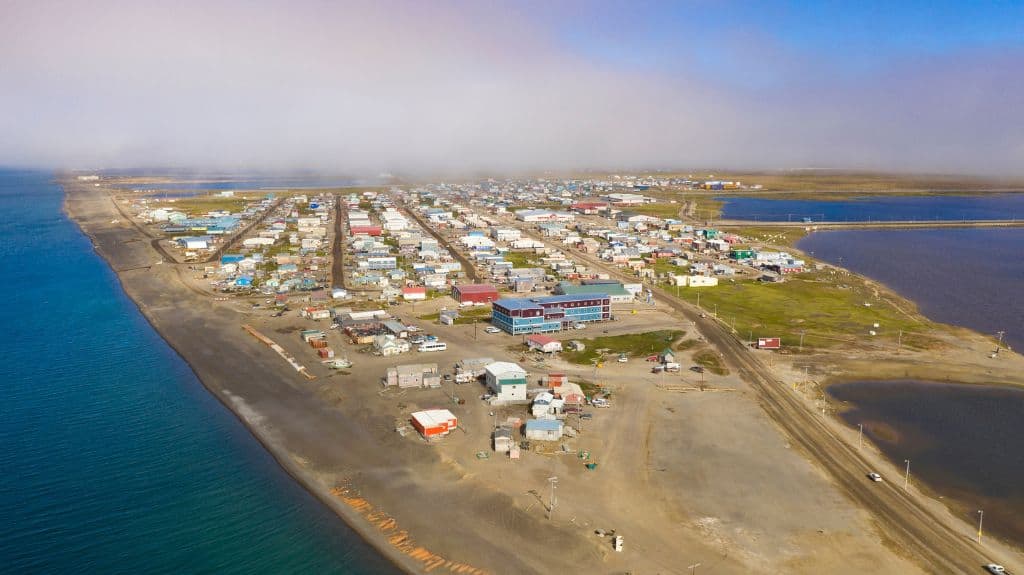
There is nowhere in Alaska that experiences 6 months of darkness and 6 months of night.
Only Utqiagvik in the North Slope of the Arctic Circle experiences upwards of 65 days of polar night, but even so may have some periods of infrequent, weak light that makes its way through.
The winter months in Alaska, regardless of which region you’re in, all have some level of daylight with the exception of Utqiagvik, which still does not get completely dark for a full 6 months.
What Time of Year Is There No Night in Alaska?
Also known as the “midnight sun”, this phenomenon is commonly defined as the sun being visible above the horizon line at midnight in the Arctic and Antarctic summers, and typically happens between late May and early August, with the peak being around the summer solstice in late June.
During this period, the far north of Alaska experience 23+ hours of daylight. This constant daylight can be disorienting to visitors, but for locals, it’s a welcome relief from the dark winter months. It also provides an opportunity for extended outdoor activities such as fishing, hiking, and wildlife viewing.
Unfortunately, it is also visible only in the remote Alaskan town of Utqiagvik, so unless you have a private bush plane on standby to get you there, it’s likely something you won’t ever see.
However, having lived on the Kenai Peninsula for an entire summer, I can say that you will see something very close, which includes nearly 20 hours of daylight on the summer solstice which falls between June 20-22 every year.
It’s not completely dark due to the very early morning hours between midnight and 4:00AM having some level of dusk to them, but I will say it never gets completely dark and it’s actually rather difficult to sleep because of it.
Far less travel and logistics are required to reach the Kenai Peninsula, so if you were hoping to visit Seward (which is known for its incredible Kenai Fjords Tours) or Homer this summer season, it’s a great place to get a taste of the midnight sun!
How Do Alaskans Deal with Darkness?

Alaskans have devised several strategies to cope with the extended periods of darkness, especially in regions like Utqiagvik where the polar night can be quite overwhelming.
One common approach is the use of light therapy, which involves exposure to bright artificial light designed to mimic natural sunlight and help regulate sleep patterns and mood.
Alaskans also make an effort to maintain regular routines, staying active through indoor activities such as gym workouts, community events, and social gatherings, which provide mental and emotional support during the darker months.
Additionally, Alaskans often focus on winter sports and festivals, embracing winter activities like skiing, snowshoeing, and ice fishing, which not only help them stay physically active but also foster a sense of community and enjoyment despite the lack of daylight.
Creating cozy indoor environments with warm lighting and decor, enjoying hobbies, and spending quality time with family and friends further contribute to their ability to thrive during the months of darkness.
How Do Alaskans Sleep in the Summer?
During the summer months, Alaskans often rely on a combination of strategies to adapt to the constant daylight and ensure they get quality sleep. One of the most effective solutions is using blackout curtains or blinds to darken sleeping areas, preventing the pervasive light from disrupting sleep patterns.
Additionally, many Alaskans maintain a consistent bedtime routine, which helps signal to their bodies that it’s time to wind down, even when it’s bright outside. Some residents also use sleep masks to block any incoming light, while others may rely on white noise machines to mask noises that can be more noticeable during the quiet, light summer nights.
Staying active during the day and minimizing screen time before bed are also common practices that support a healthy sleep routine in the land of the midnight sun.
Whether it’s your first time visiting Alaska or you’re just keen on experiencing close to a polar night, you’re in for a real treat no matter when you decide to visit. If you do make it up to the great north, be sure to pick up some authentic Alaskan souvenirs while you’re there.
The only place that 30 days of night in Alaska can be experienced is in Utqiagvik which requires a plane, boat, or snowmachine to access.


