
Can You See the Northern Lights in Anchorage, AK?

How often can you see the northern lights in Anchorage, AK? What is the best month to view the aurora borealis in Anchorage?
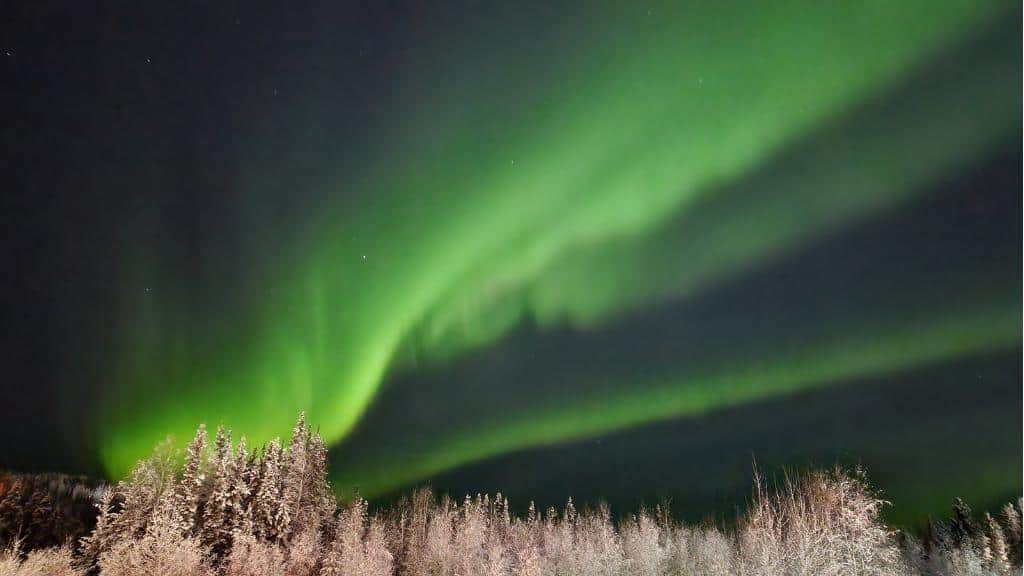
If you’re planning a trip to The Last Frontier on a special Alaska vacation, chances are that getting the chance to see the northern lights is high on your list of things to include. Afterall, it’s been one of the highlights of the state for decades and is one of the most sought-after natural phenomenons on the planet!
But, where do you even begin to research how to find them? They live in the sky, sure… but, where do they appear most? When is the best time to see them? Do you really have to stay up until the wee hours of the morning to get a glimpse of them? And most importantly, will they appear during your trip if you’ll be sticking around the brightly lit Anchorage?
As a long-time frequenter of the 49th state and having lived there for nearly a year (including the frigid winter months), we’ve provided you with the inside scoop on how you can best prepare yourself for spotting the northern lights near Anchorage, AK!
How Often Can You See the Northern Lights in Anchorage, AK?

While the northern lights are technically active every night of the year, you can only see them between 1-4 nights in Anchorage each week during peak viewing season (October through March).
Unfortunately, there’s a good reason why Sean and I moved to Fairbanks, AK for the winter months. It was so we had the best chance possible of spotting the northern lights!
In Alaska, the northern lights exist everywhere, but you’re more likely to spot them the closer you get to the Arctic Circle where polar nights exist.
Thus, with Anchorage being located relatively far south near the Kenai Peninsula, your chances of seeing the auroras drastically decrease owing to reduced electromagnetic activity and the increase in light pollution in the big city.
So, while it is absolutely possible to see the northern lights in Anchorage, you won’t see them as often as you would in places like Fairbanks, Coldfoot, or Deadhorse. They make appearances every couple of weeks, on average, though this is hard to predict and varies from year to year.
If seeing the auroras is a bucket list item for you, then you’ll want to skip a summer cruise ship that docks in Anchorage and instead opt for a winter visit to Fairbanks and North Pole!
Best Tips for Northern Lights Viewing Near Anchorage
It took us a long time to hone in our aurora hunting skills and sadly spent many nights unnecessarily up past 3AM when there was very little chance of seeing the auroras. After a lot of trial and error, we eventually learned a thing or two about aurora predictions and finally were able to work smarter not harder.
Now, we’re here to teach you everything you’ll need to know about how to have the best chances of viewing the northern lights, even if you’re in a less-than-ideal destination like Anchorage.
- Precipitation = Get Some Sleep: Rain, snow, and sleet all mean one things – clouds! Unfortunately, even with a Kp of 6, you still wouldn’t be able to see much if the sky is full of clouds. So, keep an eye on the weather forecast and unless it’s supposed to clear, do yourself a favor and get some sleep.
- You Need to Learn What a Kp Value Is: Kp values measure the distance that the aurora will reach from the poles, ranging from 0-9. Between 3-6 is considered a “big storm” and can be a great opportunity for viewing the northern lights! We always check the Geophysical Institute’s Kp Scale before going out.
- Kp Values Aren’t The Only Thing That Matter: We’ve had incredible viewings with Kp values of 1 and 2, so don’t assume that just because the forecast is calling for a low Kp that you shouldn’t check the other variables in play. Wind speed and direction, weather and visibility, and Kp values all matter!
- You Can See Northern Lights Predictions 70 Minutes in Advance: This is one of the most important tools you have at your fingertips, and it’s offered by the SWPC. Their 30-minute forecast actually often provides a lead time of 70 minutes, giving you over an hour to get to a great viewing spot away from light pollution!
If you see a thick green “ring” around Alaska or any level of yellow or orange, jump in your car and be ready to go. - Keep an Eye on the Forecast: Alaska’s weather is blatantly unpredictable, so just because it was supposed to be a clear night around lunch time doesn’t mean that’ll be the case at 10PM. Consistently check the forecast every hour and use the hour-by-hour radar to watch any cloud activity in your area.
- You Need To Get Out of the City: Light pollution is the #1 reason why most people staying at hotels in Anchorage don’t see the northern lights. Headlights, street lights, and building lights all affect how visible the auroras are to the human eye, so it is absolutely necessary to escape them.
If you don’t have your own car, you can join a northern lights tour! - You Need To Be Patient: We’re sorry to tell you that the northern lights don’t care if you’re cold and tired, so you need to dress warm, pack some snacks and hot beverages, and bring a deck of cards or a good book because you could be sitting in the extreme cold for several hours.
Viewing the northern lights is quite literally a waiting game, so you’ll need to get comfortable with being bored. - You Also Need to Know About Solar Winds: This might sound tricky to understand, but it’s actually incredibly easy. Just use the SWPC’s Real Time Solar Wind Tracker (look at the purple line for solar wind speed) and if it’s over 400 kilometers per second, then you have very good wind speeds.
You can also look at Space Weather Live to view solar wind activity and Kp values in one spot! - Get Away From Too Many Trees: While snow-covered pine trees can make for a stunning photo backdrop for the auroras, a lot of the time these trees actually end up blocking your view. It’s fine to have some trees in the background, but it’s best to keep them out of the foreground and get yourself in a wide open space where you can see the sky all around you.
- If You Don’t See Them, Don’t Get Discouraged: It’s actually quite unlikely that you’ll see the northern lights on your first try unless you get really lucky, so you’ll need to think of this experience as something you have to try to do every night that conditions are good until you leave Alaska.
Stay positive and hopeful because the northern lights LOVE to put on a good show as soon as people leave the viewing lots!
Anchorage Northern Lights Forecast Tonight

If you’re looking for the aurora forecast for tonight or at any point during your visit, you can use the Space Weather Prediction Center which is operated by the National Oceanic and Atmospheric Administration!
They provide updated auroral and solar activity every 30 minutes so you can know whether or not you should get out of a bed for an aurora hunt.
Pro Tip: We typically recommend taking a guided tour to the best viewing locations instead of using your car rental to take a DIY road trip through Alaska in the winter. Road and weather conditions can be extremely dangerous (even for us locals), and having the right safety gear on hand is essential should something go wrong.
We can’t tell you how many tourists we’ve dug out of snow banks with no safety gear in the middle of the night in -30°F temperatures (yes, Alaska does get that cold).
So, take a look at these 10 BEST Alaska Northern Lights Tours in 2024 so you don’t have to be your own rescue team in remote Alaska should your aurora viewing efforts turn awry.
Where To See Northern Lights in Anchorage

Below, we’ve provided a list of some of the best places to look for northern lights near Anchorage. Keep in mind that none of them are within walking distance of the city, so you’ll need to rent a car if you plan on doing some self-driving tours (provided the road conditions are good, of course).
Simply click the name of each place to get the Google Maps location of each spot!
- Point Woronzof: Located near the Ted Stevens Anchorage International Airport, Point Woronzof provides a fantastic viewing point for the northern lights. The lack of city light pollution and its stunning overlook of the ocean create a stunning backdrop for the aurora borealis.
- Glen Alps Overlook: Situated high in the Chugach Mountains, the Glen Alps Overlook offers unobstructed views of the night sky. The isolated location reduces light pollution, making it a spectacular spot to catch a glimpse of the northern lights.
- Eklutna Lake: Located further out in the Chugach State Park, Eklutna Lake’s remote setting about an hour away from city lights offers a serene location to watch the northern lights. The reflection of the auroras on the lake’s surface can make for a mesmerizing experience!
- Reflections Lake: True to its name, Reflections Lake offers a beautiful mirror-like surface for the northern lights to dance upon. Located just an hour north of Anchorage, the spot offers a wonderful blend of convenience and natural beauty. You could actually combine a visit to both Reflections and Eklutna Lakes!
- Downtown Anchorage Viewpoint: This is probably the most popular aurora viewing spot near Anchorage since it’s only 5 miles from downtown. You can reach it in about 10 minutes by car and it provides a decent distance from the city lights. If you’re in a pinch and don’t have a lot of time, this can be a great place to check out!
- Skyline Drive in Eagle River: Skyline Drive provides a fantastic snowy, tree-covered landscape backdrop for the northern lights should they choose to make an appearance. We will notes that it’s usually a little crowded than other points on this list since it’s only 25 minutes from the city but provides an excellent escape from the city lights.
- Beluga Point on Turnagain Arm: Located about 25 minutes south of downtown Anchorage, Beluga Point is typically a popular pitstop along the Seward Highway for spotting wildlife. But, come winter, it’s one of the best spots to see northern lights!
- Ingram Creek: Just a little south of Portage, Ingram Creek offers great fishing opportunities in the summer and northern lights viewing opportunities in the winter. It’s also quite off the beaten path, so it’s less likely you’ll come across other tourists here.
- Portage Lake: This gorgeous lake just 6.8 miles off the Seward Highway provides an easy escape to a beautiful aurora viewing location. Plus, if it’s a calm night with little to no wind, you can often see gorgeous reflections off the water!
- Kincaid Park: This is one of our absolute favorite places to see moose in the summer, but thanks to its location overlooking the city, visitors can see epic northern lights shows over Anchorage on a night with extreme aurora activity!
Plus, it’s only 20 minutes from downtown so you don’t have to dedicate too much time to getting there.
FAQ
In this last section, we’ve provided some helpful information for your aurora sightseeing tours and DIY Alaskan road trip ideas!
When Can I See the Northern Lights in Anchorage?
You can actually see the northern lights in Anchorage for about 8 months a year from October through May since this is when the number of daylight hours will be at the fewest.
For the best chances of actually seeing the northern lights, light pollution needs to be extremely low – this includes sun and moonlight.
So, if you’re in Anchorage during these months, head to one of the viewing locations we mentioned above that are located just outside of the city where the light interference won’t be as severe.
What is the Best Month to See the Northern Lights in Alaska?
The best month to see the northern lights in Alaska is between December and January as this is when daylight hours are at their lowest so the sky is almost always dark minus a few hours midday.
Despite aurora activity being at its peak in September and March, it’s important to remember that clear skies are also a major factor in viewing the auroras, so be sure to keep an eye on the weather forecast!
Clouds due to any type of precipitation will cover nearly all northern light activity, so don’t get your hopes up if the aurora forecast says “excellent” but the weather forecast says “cloudy.”
Where is the Best Place in Alaska to See the Northern Lights Tonight?
To get the best idea of where to see the northern lights tonight in Alaska, you’ll want to use the Aurora Fairbanks Real Time Tracker.
They provide the most up-to-date auroral activity information for locations spanning the interior of the state, so you can expect the most accurate information from them.
Are There Northern Lights Every Night in Alaska?

Alaska happens to be one of the only places in the world where aurora activity happens almost every single day, with some of the best viewing destinations being in the northern part of the state.
We don’t see them every day due to a number of external factors including daylight hours, poor weather conditions, and low solar activity, but northern lights do occur almost daily in Alaska.
What Time is Best to View the Northern Lights Tonight?
Typically, whether you’re hoping for a time range with the best chances of spotting the auroras tonight or during your future trip, between 10PM and 2AM are the best (great for you night owls, but not so great for anyone that’s in their pajamas by 8:30PM).
However, this is far from a definitive time range. We’ve seen the northern lights as early as 7:00PM and as late as 5:00AM when we were living in Fairbanks in the month of January.
As long as the stars align (quite literally) and there’s little to no light pollution, the weather and skies are clear, Kp values are looking solid, and the solar wind is pointing due south over 350 kilometers per second, you have great chances of seeing the northern lights.
I know that sounds like a lot to keep track of, but just use the websites we provided above and they make it very simple for you to understand.
For our full disclosure on all the tools we used to follow these variables, check out our post on the 10 BEST Alaska Northern Lights Tours in 2024!
Can You See the Northern Lights in Anchorage Alaska in August?

While it is possible to see the northern lights in Anchorage, AK in August, your chances are slimmer than they would be in that of September or later in the season.
August starts to see a decline in daylight hours, however, rain is common – which means clouds! And as we discussed above, clouds are no good for aurora viewing. It doesn’t matter if you’re the only one camping inside Denali National Park with a single flashlight as a light source.
If it’s cloudy, you won’t see a thing, so you should try to plan your trip around when the weather is more likely to be at its clearest for the year (i.e. winter!). Afterall, photos of the northern lights that you took yourself are some of the most authentic souvenirs from Alaska you can bring home!
Anchorage makes for a great base for experiencing the northern lights in Alaska, however, your chances of spotting the auroras from the city itself are limited. For the best chances, it’s recommended to travel farther north towards Fairbanks where activity will be higher and daylight hours will be lower.
Also, remember to take into account all of the external factors that can impact your chances of seeing the northern lights, such as weather conditions and light pollution. You can see northern lights in Anchorage, AK, but it’s all about aurora activity, timing, and weather conditions!
If this will be your first trip to Alaska, be sure to take a look at our Essential Guide to Traveling to Alaska!


