
Alaska in May: 21 Pros and Cons of Visiting Alaska in Spring

Our family of three, if you include our dog, Leska, lived in Alaska throughout the spring season, and we can honestly say that Alaska in May is one of the most beautiful times to visit!
May is known as the “shoulder season” in Alaska, meaning it falls between the peak tourist seasons of summer and winter. But, all this really means for you is that you’re going to find sweet deals on flights and accommodations, and have the opportunity to witness the melting of the frozen landscape and the blooming of fireweed alongside wildlife awakening from their winter slumber.
Our absolute favorite part of spring is when the fireweed blooms along the highways and in the national parks and the Forget Me Nots (state flower) start sprouting in neighborhood gardens! There are still so few tourists around, so this is the time when the locals begin prepping their boats and staging their gear for the summer season.
As everyone celebrates the end of another winter, restaurants and local tour companies reopen their doors, while hunting and fishing licenses flood email inboxes. Spring is a fantastic time to visit Alaska, and in this post we’ve outlined everything you need to know about visiting between March and May.
We’ve outlined the advantages and disadvantages of visiting Alaska in the spring, what kind of weather you can expect between March and May, the best things to do in Alaska in spring, and even answered some helpful questions to help decide if it’s is the right time for your trip based on your own interests.
Pros of Visiting Alaska in May

- It’s Way Less Crowded: One of our absolute favorite reasons for visiting Alaska in May is that you’ll be seeing far fewer tourists everywhere you go from the national parks and on local tours, to restaurants and souvenir shops.
Road work stops along the Seward Highway typically don’t take nearly as long and you won’t be fighting for a spot to pull over and take photos of the scenery. - It’s Super Cost-Effective: Thanks to it not being the peak season, you can often find amazing discounted rates for flights and accommodations, making your trip a little bit more budget-friendly! We all know that Alaska is no budget destination, but you can certainly make it more affordable by visiting outside of peak seasons.
- Wildlife Viewing Begins: Spring is a fantastic time for wildlife enthusiasts like myself! Bears are coming out of hibernation and moose can be seen enjoying berries down by local rivers and ponds, while migratory birds return to the region.
Even Kenai Fjords Tours begin again to see migratory whales returning to the Gulf! Since there will still be far fewer tourists around, you’ll enjoy significantly more sightings almost entirely on your own. - The Wildflowers are in Bloom: May is the time when the snow starts to melt (though it can still be quite snowy depending on where you visit), and the landscapes begin to bloom.
The transformation from winter to spring is absolutely breathtaking! We love how the local fireweed covers the roadways and valleys in vibrant pink, while the lush greenery returns to the forests and mountains. - Ample Daylight Hours for Sightseeing: By the time May rolls around, daylight hours have increased immensely since the winter months, providing longer days for exploration and activities. Of course, the number of hours will vary depending on where you visit in the state, but you can usually expect between 16-22 hours of daylight in May!
- Fishing Opportunities: May marks the beginning of the fishing season in Alaska, which is great for sport fishing enthusiasts! There’s a massive variety of fish local to the state that make their way into the Gulf of Alaska, all ready to be caught, vacuum-sealed, and shipped right to your front door.
If you’ll be in Ketchikan, check out these phenomenal fishing charters!

- You Don’t Need to Plug Your Car in Anymore: In the chilly winter months in interior Alaska, you’ll have to plug your car engine block heater in for several hours before you can go anywhere.
This requires advance planning (if you don’t have a timer) and can be quite time-consuming if you forget beforehand and your car doesn’t start! - The Dalton Highway Starts to Reopen: In the beginning of September once the snow starts to fall, the Dalton Highway becomes almost completely impassible due to severe road conditions that often put 18-wheelers off course.
But, come May when the majority of the snow and ice has melted, visitors can make their way up to the Arctic Circle without having to pay for an expensive tour! - The Fur Rondy Kicks Off Spring: From February 26-March 8, 2026, the locals gather at a massive festival in Anchorage called The Fur Rendezvous to celebrate the start of spring with endless games, food stalls, rides, and prizes.
- The Weather is Manageable: There’s no denying the fact that Alaska’s bone-chilling temperatures affect your trip, but come May, they’re not too bad.
You can usually get away with long pants, a down jacket, and a rain coat and boots to go out for a little while. If you plan on being out for the whole day, then warm socks and either fleece-lined pants or an additional set of long johns will likely be necessary.
Cons of Visiting Alaska in May

- Unpredictable Weather: While it may be the “turn of the seasons” so to speak, the weather can still be unpredictable with frequent rain and snow showers. If you plan on visiting Alaska in the spring, you’ll want to be prepared for fluctuating temperatures with plenty of war layers and rain gear!
We’ve seen temperatures drop into the low 30s (Fahrenheit) in early spring even on the Kenai Peninsula, so be sure to come prepared for cold weather. - Activities May Still Be Limited: As May falls between the winter and summer seasons, not all activities may be available in the beginning of the month. Some tours or attractions may still be closed for the season until May 15th or later, particularly glacier hikes and helicopter and flightseeing tours.
If you want to visit in late spring, you’ll certainly need to check what will be open and operating before booking any flights or accommodations to ensure you’ll still be able to do everything you want to do before setting your travel dates in stone. - Mosquitoes and Spiders: As warmer weather approaches, so do the bugs… May is typically prime time for mosquito and black fly activity in some parts of Alaska, so you’ll definitely want to pick up some bug spray when you land in Anchorage.
We actually joke that the local mosquitoes aren’t affected by bug spray unless the Deet content is above 50%, so keep this in mind before you pick up the “non-toxic, child-safe” stuff! It rarely works on Alaska’s barbarian-level bugs. - Lack of Snow: If you’re hoping to experience winter activities like snowmobiling, ice fishing, or skiing, May may not offer enough snow cover for these activities, particularly if you’ll be sticking around the Kenai Peninsula or southeast Alaska.
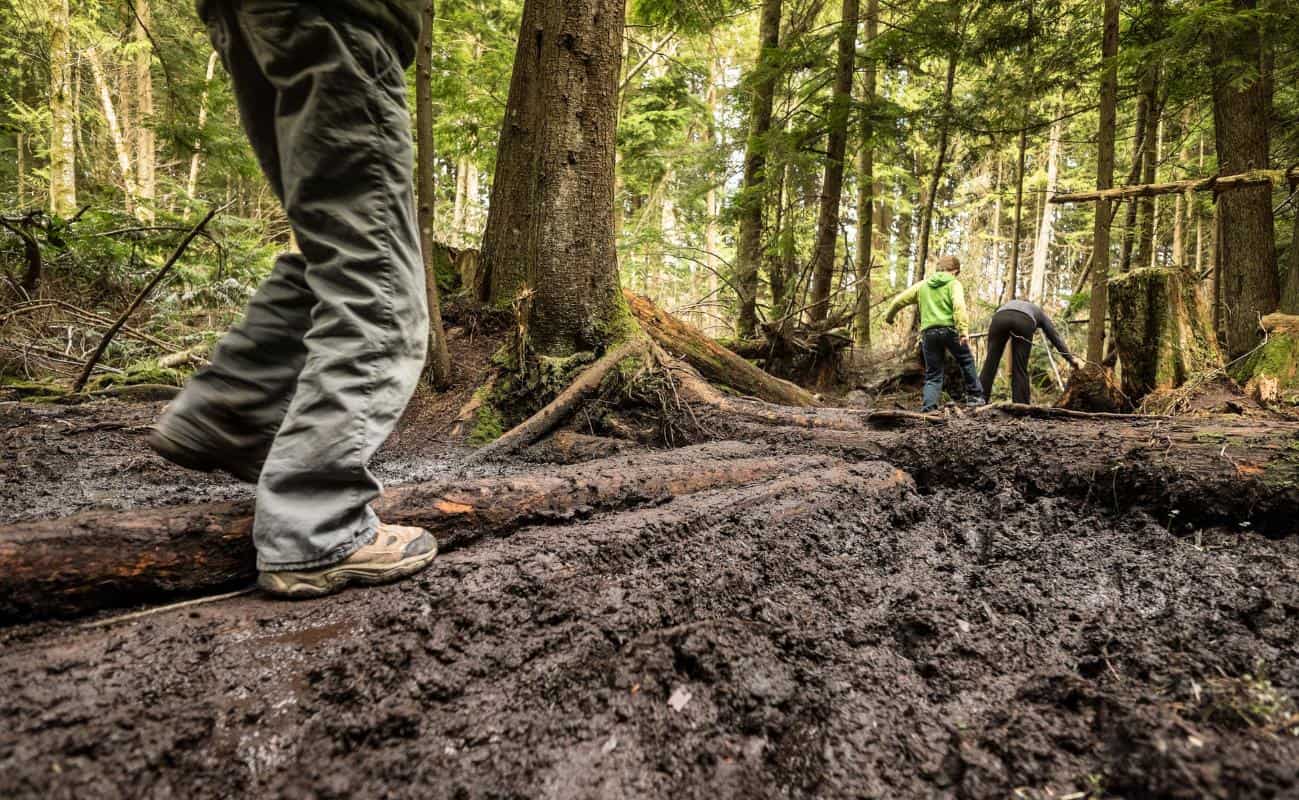
- Muddy Trails: With the mass melting of snow, hiking trails are usually muddy and less enjoyable to navigate. On the opposite side of this, however, the rivers, waterfalls, and lakes are usually beautifully full!
Ultimately, whether or not wet and muddy trails will bother you depends on what kind of hiker you are. Those who don’t mind getting dirty will have the trails to themselves!
- Northern Lights are Scarce: While March can still be a great time for viewing the northern lights, May’s often rainy weather and long daylight hours make viewing conditions rather poor.
If you really want to do some northern lights viewing during your trip, then it’s best to wait until between November and February to visit, if possible. - Cruise Ships Start Arriving: Come late May, Alaskan cruises start making their way up from Vancouver and Seattle through the Inside Passage en route to Juneau, Ketchikan, and Skagway.
If you were hoping to visit before these tens of thousands of additional tourists arrive, then you’ll want to check out some cruise line schedules for your hopeful dates and see if any are scheduled to arrive during your trip! - Not Everything is Open: Most restaurants and local companies don’t open until after May 15th, so this is definitely something to keep in mind before booking any hotels or flights.
- It Can Feel Dull and Grey: Particularly if the weather doesn’t work out in your favor, Alaska can be quite cloudy, dark, rainy, and “ghost-town like” in April and May.
Businesses everywhere say “closed for the season”, boats are on-shore and winterized, ice fishing and snowmobiling has ended for the season, glacier treks are limited, and northern lights spottings become less and less common later in the spring. - It Can Be Lonely: Alaska has always been promoted as a “remote” destination that allows visitors to “escape” from their everyday lives, but in the early to mid-spring when only the sourdoughs remain and the rest of the seasonal locals still haven’t returned from the lower 48, it will become less and less probable that you’ll come across many others during your visit.
If you love the idea of a complete escape from civilization then spring can be a fantastic time to visit. But, if you also love the idea of sharing wildlife sightings and indulging in local restaurants filled with locals and tourists, then you may want to wait until early June to visit.
Alaska Weather in Spring

Springtime in Alaska brings a significant change in the weather as the state transitions from its cold, snowy winter into the beautiful, milder spring season! Below, we’ve outlined the average weather you can expect in each major region of Alaska by spring month.
~ March ~
Juneau – The average high is 44 degrees Fahrenheit while the average low is 27 degrees Fahrenheit.
Anchorage – The average high is 40 degrees Fahrenheit while the average low is 17 degrees Fahrenheit.
Fairbanks – The average high is 33 degrees Fahrenheit while the average low is -5 degrees Fahrenheit.
~ April ~
Juneau – The average high is 53 degrees Fahrenheit while the average low is 32 degrees Fahrenheit.
Anchorage – The average high is 37 degrees Fahrenheit while the average low is 26 degrees Fahrenheit.
Fairbanks – The average high is 53 degrees Fahrenheit while the average low is 11 degrees Fahrenheit.
~ May ~
Juneau – The average high is 62 degrees Fahrenheit while the average low is 37 degrees Fahrenheit.
Anchorage – The average high is 62 degrees Fahrenheit while the average low is 37 degrees Fahrenheit. Yes, it’s about the same as Juneau during the month of May.
Fairbanks – The average high is 67 degrees Fahrenheit while the average low is 33 degrees Fahrenheit.
As for precipitation, you can expect a mixed bag. While May tends to be drier than the fall and winter months, it’s not unusual to encounter frequent rain showers throughout the state, with an average rainfall of about 0.5 to 1.5 inches.
In the more northern regions of Alaska, snow can still fall in May, although it’s typically less common and less heavy than during the winter months.
However, what’s most notable about May in Alaska is the dramatic increase in daylight hours! As Alaska heads towards the summer solstice in June, the state experiences significant increases in daylight.
Toward the end of May, you can expect around 17 to 21 hours of daylight, depending on how far north you are. This means more time for you to admire the beautiful Alaskan landscapes and wildlife during your visit, making this one of our favorite times to be in the state!
In summary, if you’re planning a trip to Alaska in the springtime, prepare for a broad range of weather conditions. Pack a rain jacket and waterproof footwear, and layer your clothing to adjust to fluctuating temperatures.
And don’t forget your sunglasses to enjoy the long, bright days of the Alaskan spring!
Things To Do in Alaska in May
Like we said, spring is a wonderful time to visit The Last Frontier despite the challenges it comes with. Below, we’ve outlined some of our absolute favorite springtime activities in Alaska!
1. Explore the National Parks

Did you know that Alaska has some of the top national parks in the world? From the Kenai Fjords National Park, Glacier Bay National Park, and Katmai National Park, to the snow-capped peaks of Denali, there’s plenty to see!
Plus, they all typically open in mid-May, so if you time your Alaska trip right you could be one of the first tourists to enter for the season. This means that wildlife will be emerging out of their winter homes deep within Alaska’s interior to hunt and find freshly-sprouted vegetation.
Hiking trails will be practically empty, you can easily find spots in local campgrounds, and get backcountry hiking permits!
2. Go on a Whale Watching Tour
One of our favorite things to do in Alaska in spring is to see the migratory whales that make their way up to Alaska to feed! With the arrival of spring, marine life becomes more active and plentiful, particularly in Juneau.
Both Seward and Juneau offer incredible whale watching tours, so if you have the time and a little room in your budget, don’t miss the chance to hop on a boat tour for the chance to spot humpback whales, orcas, sea lions, and other marine species!
3. It’s a Great Time To Go Bird Watching

We’ve more recently gotten into bird photography ourselves thanks to the purchase of our 600mm lens (you can see our work on wildlyinfocus.com), and we really love seeing unique species like bald eagles in action!
Alaska is a paradise for birdwatchers as migratory birds return to the region at the end of spring. If you decide to visit during this time, then you’ll have the opportunity to see species like bald eagles, horned and tufted puffins, and sandhill cranes!
4. Have a Campfire and Cookout
After a long day out on the water or on the local hiking trails around Anchorage, the Kenai Peninsula, or Interior Alaska, there’s no better way to warm up than with a reindeer hot dog and a roaring campfire!
This may seem like a general activity that you can do anywhere (which you can), but there’s something almost magical about sitting outside under the stars in Alaska next to a firepit with a cozy blanket and a pint.
This is just how we love to celebrate the start of spring since it’s finally warm enough to actually sit outside for more than a few minutes, so we suggest you try it out if you can find a cabin rental with a firepit inclusive of wood!
5. Grab Your Rod and Go Fishing

While it’s still a bit too early to go for salmon considering the run doesn’t typically start until late June, you can certainly still fish for halibut, rock fish, and trout! Everywhere from Alaska’s vast coastline to its interior lakes and rivers offer opportunities to catch trophy-sized fish, worthy of targeting for a fresh dinner.
Some areas also offer fly fishing opportunities (Sean’s favorite!), you’ll just need to make sure you pick up your Alaska fishing license before you get started.
6. Visit the Local Museums and Cultural Centers
Since Alaska’s weather can be quite rainy in the spring, you can pay a visit to local museums and cultural centers to learn about the state’s incredible wildlife and history!
We really love The Alaska Native Heritage Center in Anchorage and the Museum of the North in Fairbanks, though we’ve also heard from some local friends of ours that the Anchorage Museum is a must-visit site.
7. Go for a Scenic Drive Along the State’s Highways

This one may seem like an odd “activity”, but going for a drive along Alaska’s state highways can show you everything from incredible wildlife sightings to beautiful scenery of coastlines and mountain ranges.
Especially since you’ll be blessed with longer daylight hours, taking a scenic drive along one of Alaska’s scenic byways like the Seward Highway or Denali Highway can be a splendid activity to include in your Alaska road trip!
8. Attend Local Events and Festivals
Spring marks the beginning of the festival season in Alaska, with local events like the Kodiak Crab Festival and the Alyeska Slush Cup in Girdwood bringing in thousands of visitors to partake in spring celebrations.
We always recommend taking a look at Alaska.org to see a full list of events and festivals taking place year-round!
9. Look for Wildlife Along the Roads and Local Trails
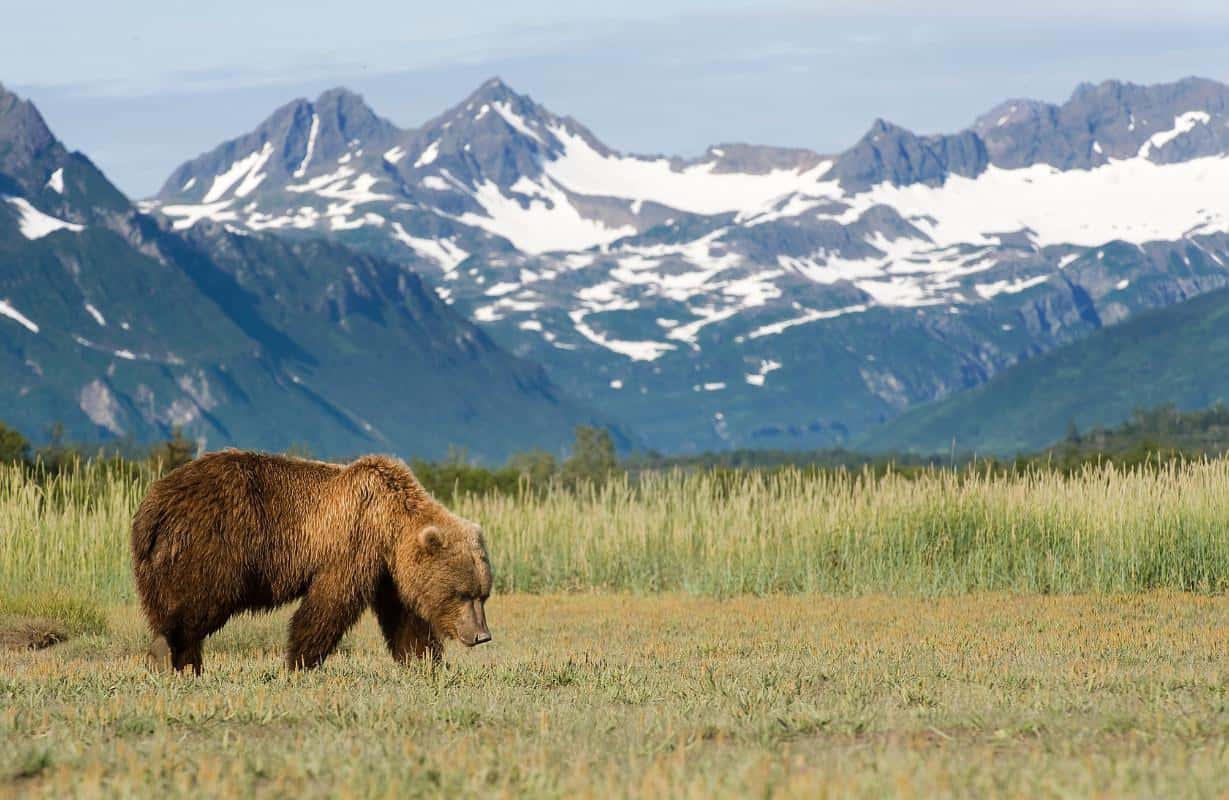
Come April, even bears start to emerge looking for food after a long winter season, so you can often see everything from larger mammals like moose and bears to coyotes, foxes, and even wolves scouring riversides for fish and the low bushes along hiking trails for berries.
It’s quite easy to find wildlife, especially later in the spring season during May, since you can just drive to the grocery store and usually come across 2-3 moose on a single drive!
If you’re into photography, bring a backup battery and an empty SD card because it’s likely you’ll come across a bald eagle at the bare minimum!
10. Go For a Bike Ride
Alaska has some extremely bikeable regions with the Tony Knowles Coastal Trail in Anchorage being among the most famous. There are dozens of amazing coastal paths all over the state that remain relatively flat, which is perfect if you want to create your own DIY food and drink tour!
We loved biking through Denali National Park which is also an option if you’re there after the park road opens for the season.
You’ll just need to call the ranger station in Denali to reserve your bicycle spot on one of their transit buses (1-800-622-7275 or 907 272-7275 for international or local Anchorage callers)!
FAQ
In this last section, we’ve addressed some essential information surrounding a spring trip to Alaska including if it’s a good time to see the northern lights, how much wildlife you may be able to see, how to pack, and more!
Is May a Good Month to Go to Alaska?

May is a great month to visit Alaska! The weather is generally milder, and the state is less crowded compared to the peak summer months which means better deals on flights and accommodations, as well.
Also, the longer daylight hours give visitors ample time to enjoy various outdoor activities and sightseeing. It’s important to note, however, that the weather can be unpredictable during this time of year and some summer activities may not be available yet.
Therefore, if you have your heart set on going halibut fishing in Homer or taking the ferry from Ketchikan to Juneau, then you may want to consider visiting in June or July when these activities are at their most enjoyable.
Is May Still Cold in Alaska?
Generally, it is not too cold to visit Alaska in May, but it’s certainly not warm yet. The temperatures during this time can range from the mid-30s to low 50s Fahrenheit (1-11 degrees Celsius), which is considered relatively mild compared to the freezing winter months.
That said, it’s important to pack appropriately for a variety of weather conditions, as Alaska’s weather can change rapidly. Layered clothing, along with a rain jacket and waterproof footwear, is highly recommended since rainy, windy conditions are quite common.
It’s also a good idea to have extreme cold weather gear available in case of unexpectedly cold temperatures or snow if you’re visiting the northern interior of the state!
How Cold Is It in May in Alaska?
In Alaska, the month of May sees average temperatures that can range from the mid-30s to low 50s Fahrenheit (1-11 degrees Celsius). However, it’s important to keep in mind that these are average temperatures and that actual temperatures can fluctuate depending on the day and specific location in Alaska.
In the northernmost areas, it can still be quite cold with the potential for snowfall, while southern regions tend to be milder. Regardless, it is a significant increase in warmth from the frigid winter months.
Is It Better to Visit Alaska in May or June?

Choosing between May and June for an Alaska visit largely depends on your personal preferences.
If you prioritize fewer crowds, lower costs, and a chance to experience spring in Alaska, May would be your best bet. The wildlife begins to emerge, and the scenery is stunning with spring flowers starting to bloom! However, keep in mind that some summer activities might not be fully operational yet at this time of year.
If you’re keen on experiencing more summer activities, like fishing the iconic salmon run or exploring the backcountry on foot without being knee-deep in mud, and don’t mind the larger crowds and potentially higher costs, June may be more suitable.
The weather is typically a bit warmer in June, and the days are long, providing ample time for exploration and adventure. Plus, most Alaskan wildlife is most active between mid June and August.
However, this is Alaska’s peak season which results in higher accommodation and flight costs and a massive increase in the number of tourists all over the state.
Will I See Northern Lights in Alaska in May?
While the northern lights are typically on everyone’s Alaska bucket lists, the likelihood of witnessing this phenomenon in May is quite low. The northern lights are typically visible from late September to early April when the nights are long and dark.
As May marks the onset of longer daylight hours in Alaska, the chances of seeing the northern lights significantly reduce. However, while it is rare, there have been instances where the northern lights have been spotted in May.
We don’t like to be negative though, so we think it is always worth checking the local Aurora forecast during your stay to see what the chances are of spotting them!
Is It Too Cold to Cruise Alaska in May?
No, it’s not too cold to cruise Alaska in May, but we typically recommend visiting later in the month. The crowds are noticeably smaller compared to the peak months of June through August and the weather is generally mild and pleasant the later in the season you get.
The longer daylight hours also allow those on board a ship plenty of time for spotting wildlife and glaciers en route. Additionally, passengers may be able to enjoy lower fares during this month, as it’s still considered off-peak season!
However, keep in mind that while the scenery is gorgeous this time of year, some of the wildlife, especially bears, might still be on the move from the state’s interior. Also, some of the glacier areas might be inaccessible due to melting ice.
If you don’t mind making these sacrifices, then May can be a fantastic time for an Alaska cruise!
How Should I Dress for Alaska in May?

Dressing for Alaska in May requires a thoughtful selection of clothes to adapt to the variable weather conditions. Layering is key to adjusting to potential weather changes! Start with a base layer, such as a long-sleeved thermal top and leggings.
Add a middle layer, such as a fleece jacket or wool sweater, for warmth. Don’t forget to pack a waterproof and wind-resistant outer layer to keep you dry and safe from wind chill. Including a variety of clothing options will allow you to add or remove layers as necessary, and having a day pack to put them is a great idea.
Quality footwear is also essential! We always bring our 100% waterproof boots that can handle any weather conditions, from icy paths to muddy trails. Also, we can’t stress enough the importance of packing warm, waterproof socks. Your feet will thank you!
Gloves, scarves, and a winter hat may seem silly for a spring trip, but The Last Frontier is all but predictable and it’s better to have them and not need them than find yourself freezing cold on a shore excursion in Skagway.
May is also known for random hot and sunny days, so a few t-shirts and a bathing suit aren’t a bad idea to throw into your bag either. Pretty much, pack for both winter and summer!
Do I Need a Winter Coat in Alaska in May?
While a full-blown winter coat might not be necessary in Alaska in May, it’s wise to pack a warm, waterproof jacket along with a couple of warm inner layers. Alaska’s weather in May is unpredictable, with temperatures that can range from chilly to mild.
That’s why layering your clothing is so important! A waterproof jacket will keep you dry during sun showers and also serve as an additional layer of warmth if needed. However, if you plan to venture into the northern regions where colder temperatures and snow are possible, a winter coat is going to be necessary.
From our experience, May is always colder than we think it’ll be, so do yourself a favor and pack warmer than you think you need to. You should also be checking the weather forecast for the areas you’ll be visiting the day before you depart!
Does It Get Dark in Alaska in May?

The phenomenon of extended daylight, often referred to as the “Midnight Sun“, begins to occur in Alaska during the month of May. With each passing day as spring progresses, Alaska experiences an increase in daylight hours.
This means that it doesn’t get completely dark at night, especially the further north you go (though there will be some darkness between 2AM and 4AM).
In fact, in places like Fairbanks, it can stay light out well into the early morning hours. While this can be a unique and exciting experience, it can also affect sleep patterns, so it’s advisable to bring an eye mask if you’re sensitive to light when sleeping.
Is There Snow in Alaska in May?
Yes, you can still find snow in Alaska in May, particularly near Fairbanks! The farther south you travel in the state, the higher the likelihood of the majority of the snow being melted and slushy.
But, in the state’s deep interior, you can usually still find great cross-country ski trails and snowshoeing opportunities. Snowmobiling tours and ice fishing tours start to diminish as ice conditions start to thin and become more dangerous, however.
The spring is an ideal time to visit Alaska for travelers who want a mix of mild weather, fewer crowds, and the potential for seeing wildlife.
However, it’s essential to be prepared for varying weather conditions and plan accordingly. Whether you choose to cruise or explore by land tour, with the right clothing and equipment, your trip to Alaska in May will surely be an unforgettable experience!
If this will be your first trip to The Last Frontier, be sure to check out our Essential Guide to Traveling to Alaska where we outline everything you need to know and all of our personal travel advice for Alaska trip planning!


