
75+ Not-So-Obvious North America Road Trip Essentials

Whether you’re headed out for a weekend or a multi-month journey, this North America road trip essentials list is here to help you prepare, pack smarter, and avoid the mistakes we’ve already made.
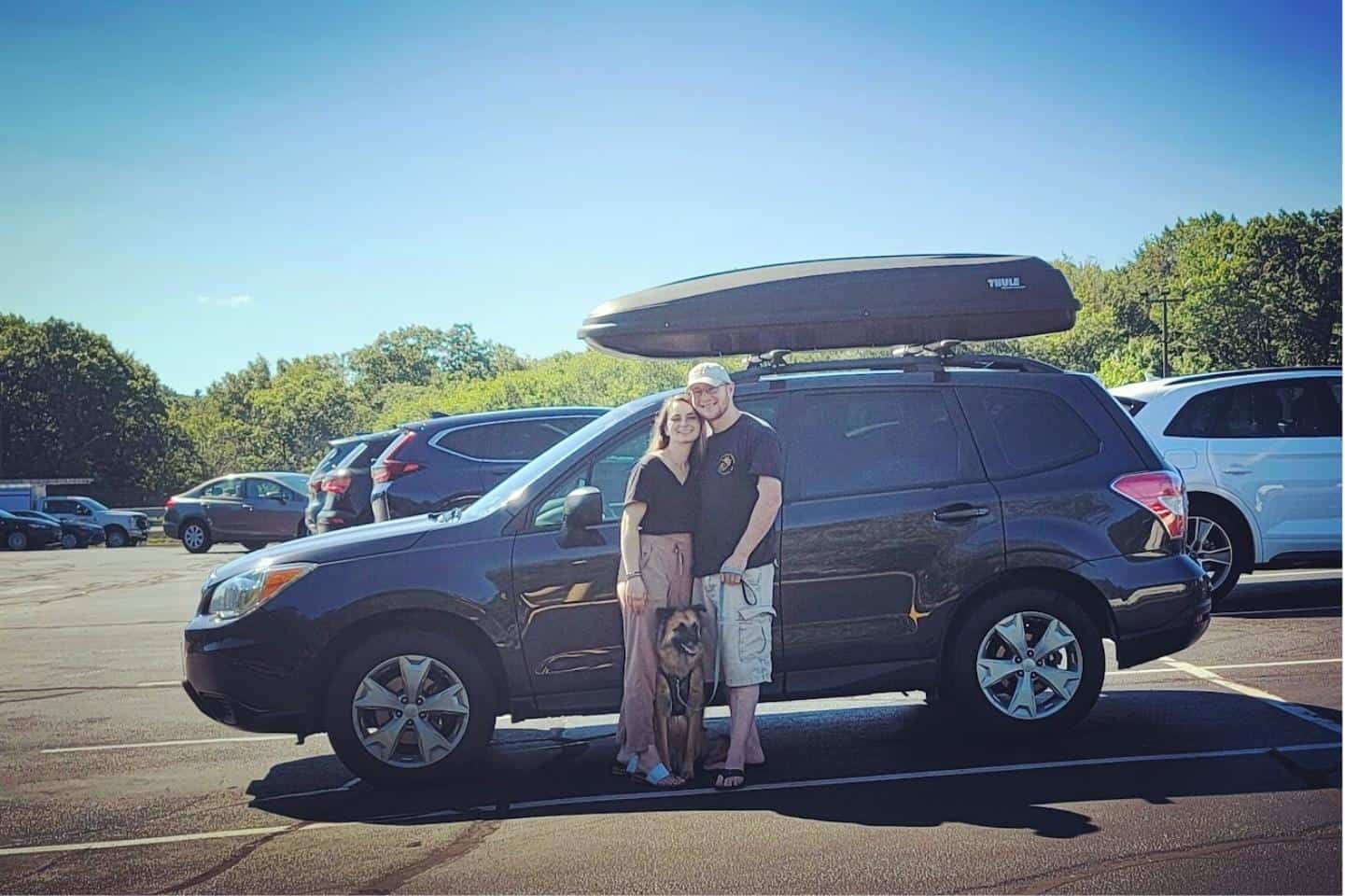
Sean and I have driven over 35,000 miles across North America. We’ve covered 35 U.S. states, visited more than 25 national parks, camped for over a month straight, spent weeks in Airbnbs, slept in our car on the U.S.-Canada border behind some guy’s bar, gotten robbed, and even stepped foot in the Arctic Ocean at the northern tip of Alaska.
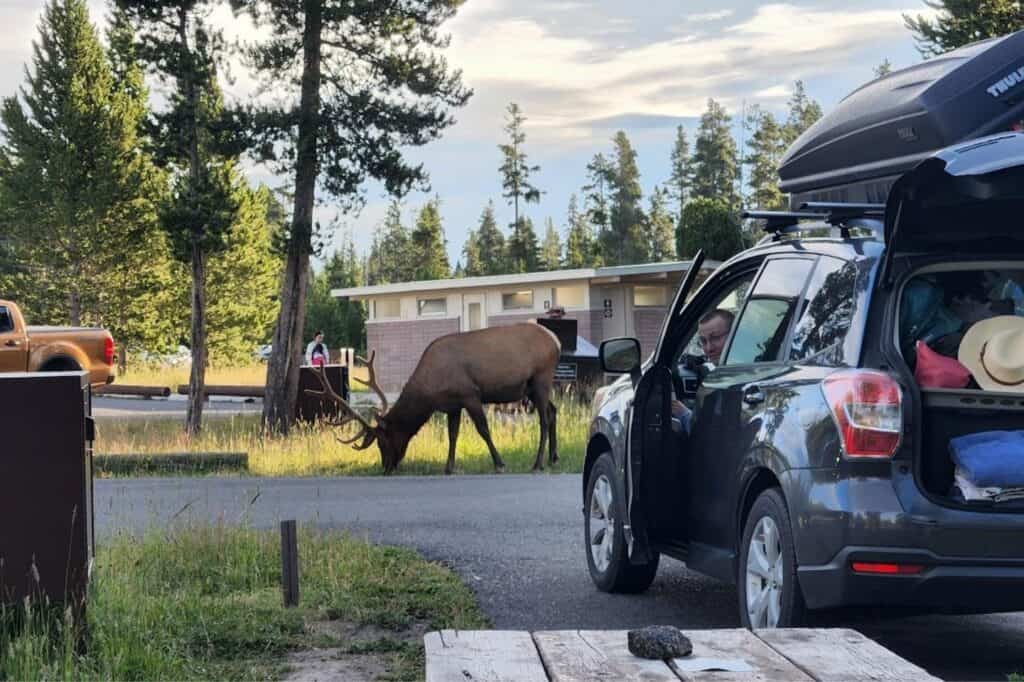
When it comes to road-tripping this continent, we’ve had our fair share of wild experiences. We’ve seen the good—wildlife encounters, remote hot springs, mountain sunrises—and the not-so-good, like food poisoning in the middle of nowhere and head-on accidents in the middle of chaotic cities.
This guide isn’t filled with fluff or a bunch of generic items you’ll never actually use. It’s based on real, practical, road-tested advice from people who’ve actually crossed North America via car twice and has a ton of not-so-obvious items that most people wouldn’t even think to bring with them.
We’ve also included a list of our very raw advice and answered some questions in the FAQ section that we sincerely believe will save you some trouble while out on the road.
👉 Also be sure to take our quiz below to see what type of U.S. road trip would be best for you!
The Ultimate North America Road Trip Essentials List
Here’s everything we personally bring on long road trips across the U.S., Canada, and beyond. You don’t need to go overboard with gear, but these are the must-haves that make life on the road easier, cleaner, safer, and more comfortable.
Car & Safety Gear
- Spare tire + jack + tire iron — Don’t assume your car came with one and know how to change a tire.
- Jumper cables (or even better, a portable jump starter like ours) This thing saved our butts when our battery died at an Airbnb in southern Colorado just outside of a national park with zero auto shops around.
- Basic tool kit — Think screwdrivers, wrench, duct tape, zip ties, and a multi-tool.
- Car manual — You’ll be surprised how many people toss this and just how much you may need it when you’re in the middle of nowhere dealing with an engine problem.
- Printed map or road atlas — Our phone GPS’ and car GPS failed in remote places like the Dalton Highway, which is when our North America Road Atlas joined us in the front seat.
- Headlamp — Listen to us when we say that there will be a night where you’re driving on a dirt road and you pop a tire. It’s practically a right of passage for U.S. road trippers!
It’s going to be next to impossible to change it while trying to hold a flashlight, so just bring the headlamps (I promise nobody cares and nobody will think you look stupid.) - Reflective safety vest + roadside triangles — There is a very high chance that on a multi-thousand mile road trip you’re going to need to pull over to change a tire, check your oil, fix a windshield wiper, etc.
People really can’t see you on the side of the road when they’re driving, so at the bare minimum wear the reflective safety vest. It just might save your life! - Tire pressure gauge & portable air compressor — These are essential for getting you through sudden drops in temperature and can get you to a mechanic should a tire spring a leak. Plus, it helps with your fuel economy.
Camping & Sleeping
- Sleeping bags — These should preferably be rated for the coldest temps you can find, usually 0-32°F. You can always unzip them if you’re a bit hot, but having camped in 22°F weather with a sleeping bag only rated for 40°F, I can tell you that it’s almost impossible to get warm and you run a real risk of hypothermia.
- Sleeping pads or an inflatable mattress — These aren’t essential, but if you’ll be camping for the majority of your road trip, then this could really save your back if you typically need a supportive mattress to get a good night’s sleep.
I really like the ones that you blow up with your foot since they take practically no effort and are really easy to set up and take apart! - Privacy curtain or car window covers — These are great for stealthy sleeping if you plan on doing 16+ hour driving days and just pulling off the road when you need to sleep.
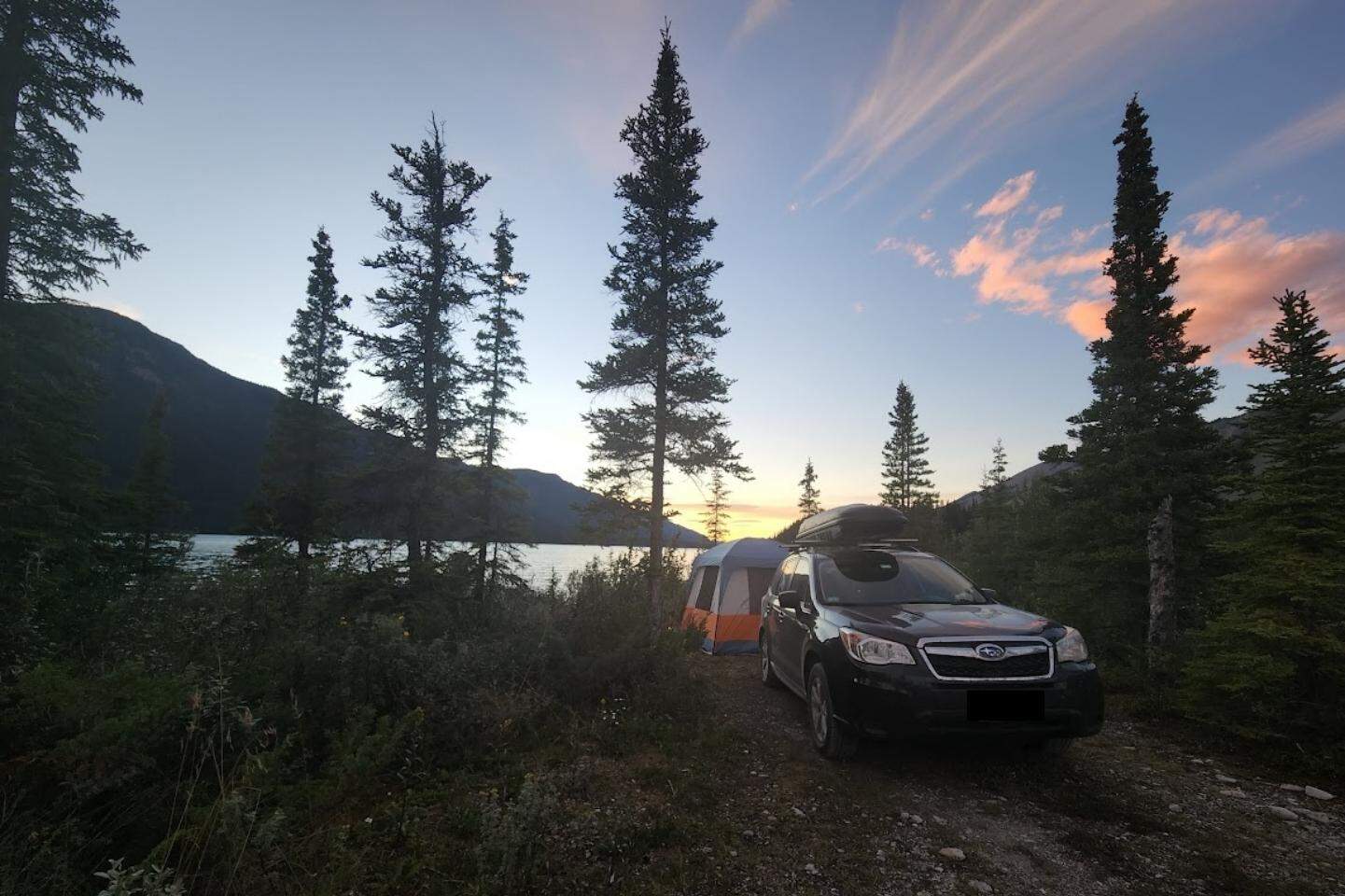
- Tent + ground tarp + high tarp + plenty of skinny rope— If you’re planning to camp, you need a reliable setup. You should find the highest part of your campsite and set up your tent on top of a tarp with the sides rolled under to help ensure any water slides under the tarp, not under your tent.
Then, use the surrounding trees to tie a tarp up above your tent, angled with the lowest part of the tent pointing downhill so that any water pours away from your tent. - Bug spray and/or mosquito net — Don’t underestimate the insanely big mosquitoes and black flies in Canada and Alaska. We joke that they fight back.
- Compact pillow + extra blanket — Again, these aren’t essential, but comfort goes a long way when you’re not sleeping in your own bed for weeks or months on end.
We didn’t use any pillows since we didn’t have the space in our car, but we did have an extra large blanket that we would drape over both of our sleeping bags at night which helped us immensely! - Eye mask + earplugs — Long gone are the days where campgrounds are these peaceful places. Now, they’re filled with yelling kids, barking dogs, and drunk adults. These two things will help sleep better in noisy campgrounds or rest stops.
- Dustpan — This is a not-so-obvious item, but being able to sweep the dirt out of your tent and car is a total game-changer if you’re not a fan of mess.
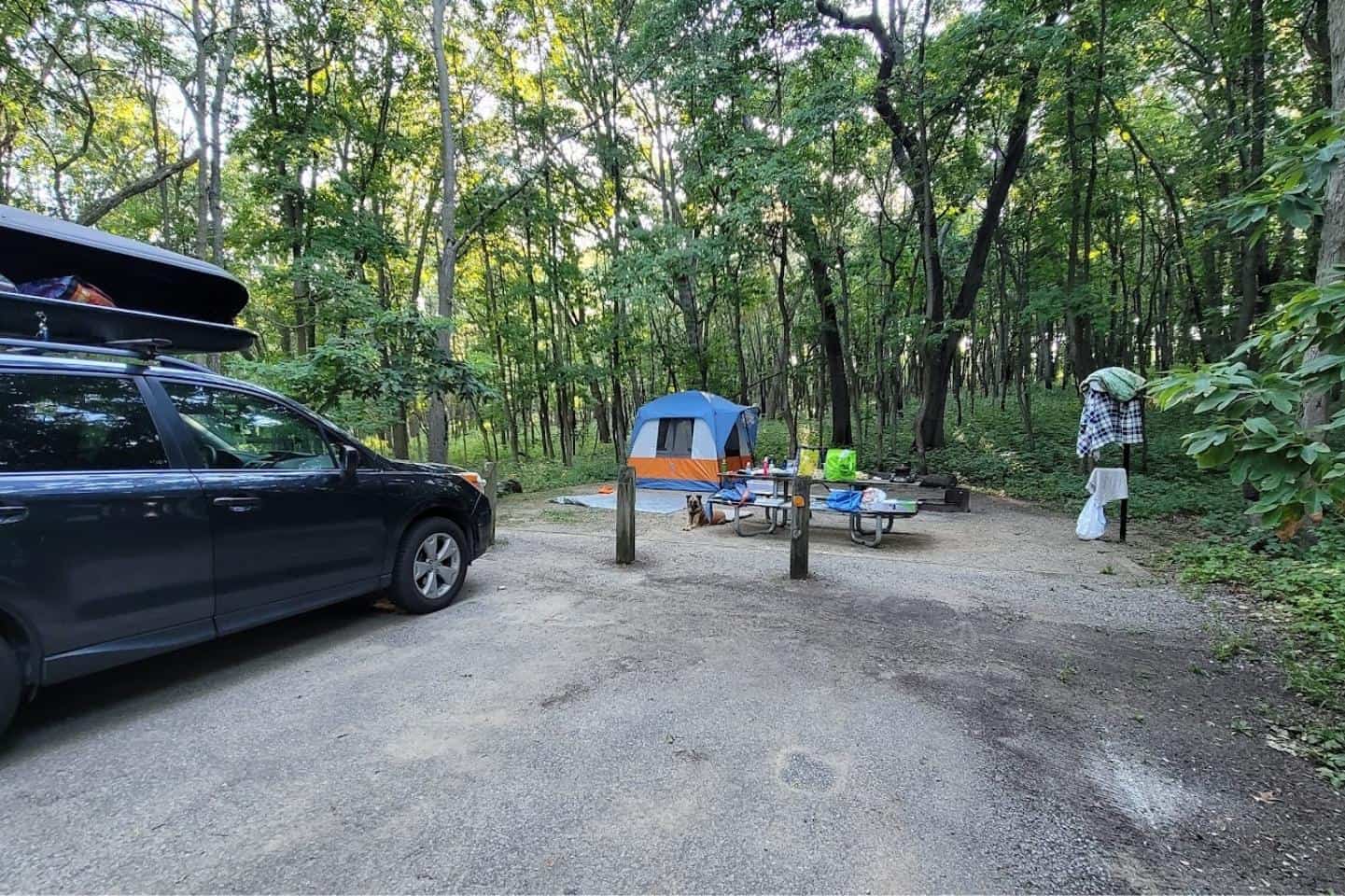
I kind of go crazy when things aren’t neat and clean, but having a dollar store dustpan made a massively positive impact on my ability to control how clean my environment was. - Picnic Table Liner — Most campground picnic tables are going to be covered in leftover food crumbs and bird poop and be soaking wet.
Having a cheap liner that covered the table itself as well as the benches made it so I could start prepping food right away without thinking about what I was touching or getting my pants soaked!
Kitchen & Cooking Gear
- Two-burner propane stove — This is a luxury item you can bring if you have the space and the budget, but we just used a one-burner Coleman stove and it worked great for two people.
- Fuel canisters — We kept 3 on us at all times since we were doing a lot of our own cooking, but if you plan on eating out a good bit and getting pre-made meals from delis and supermarkets then just 1-2 should suffice for a while until you run out.
- Lighter + waterproof matches — We even went the extra mile and bought some fire starter fuel which saved us a ton of time getting dinner going when we’d roll into campgrounds just 30 minutes before sunset.
- Utensil roll or storage case — This one is important. I can’t even talk about the amount of times I’d pull out a fork, eat my meal, then have nowhere to put my dirty fork except on the floor of the car until I’d fine a restaurant bathroom to wash it in. I know… gross.
The storage case became a big thing that I ordered after we made it to Alaska and I was so glad I had it on the way home! - Cutting board + sharp knife
- Cast iron skillet or small saucepan
- French press or AeroPress — We met many North America road trippers who had these, but we didn’t. We love coffee, but we stuck to instant or drive-thru for the entire road trip. If you really can’t go without a good cup of coffee, then this may be “essential” for you.
- Reusable plates, bowls, mugs, utensils
- Biodegradable soap + sponge + collapsible wash bin — This seemed like a weird idea, but man did it save us throughout the entirety of the trip.
- Small cooler — Ice or powered, depending on your setup.
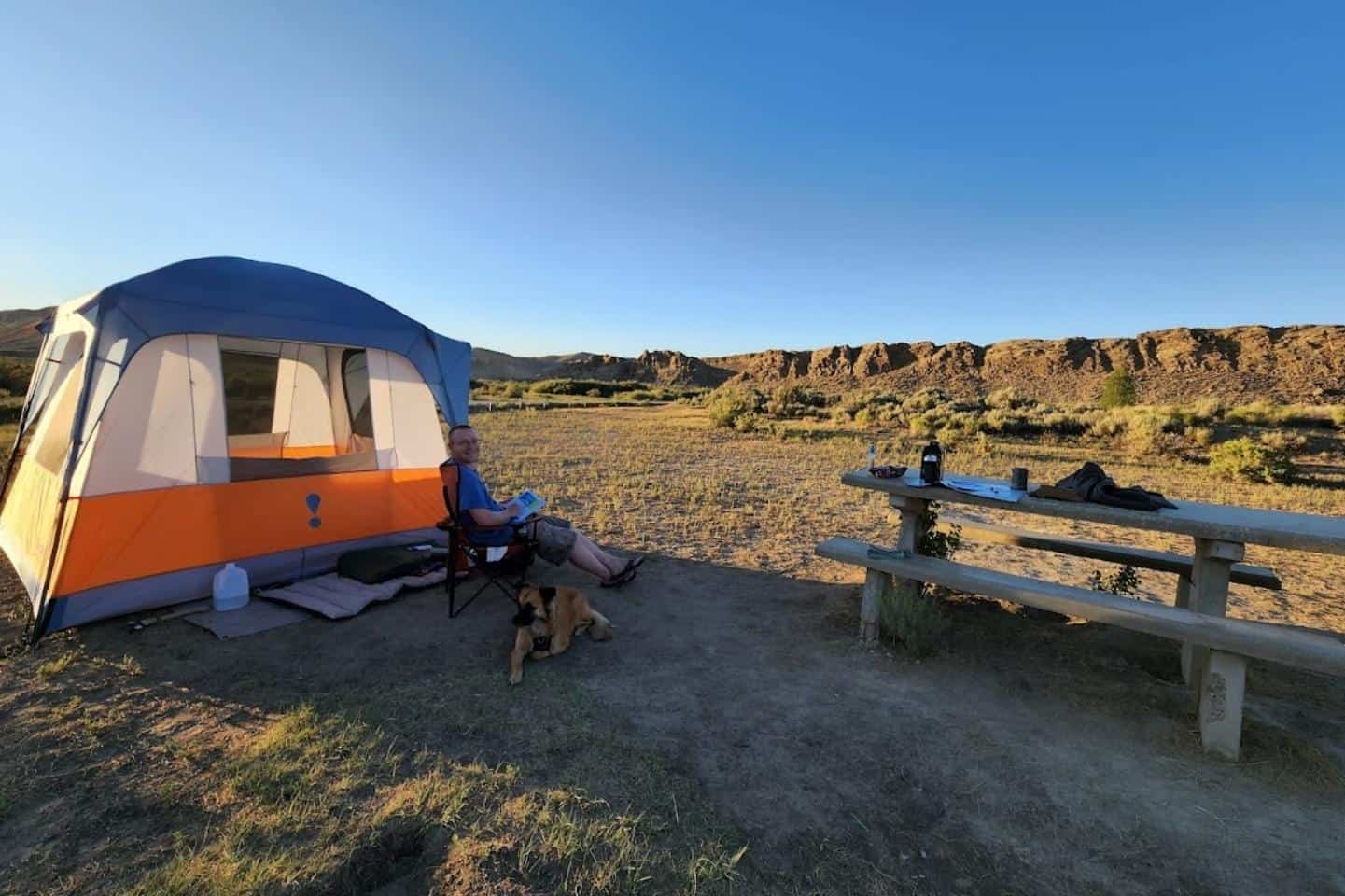
- Folding camp chairs — These might only be possible if you have a trailer or Thule on your roof racks like we did.
- Trash bags — You’d be amazed how many trash bags you’ll fill driving across the country between road snacks, coffee cups, supermarket meals, etc.
- Paper towels + wet wipes — For cleanup and spills while driving. Yes, a full coffee will hit the floor and a bagged gas station salad will likely fall between the seats upside down at some point. I might be speaking from experience.
- Seasoning kit — A little bottle of olive oil, some salt, pepper, and other seasonings will greatly improve the meals you can have while camping and they don’t take up a lot of room. I kept mine in my “cooking bin” which also had my spatula, tongs, paper plates, etc.
Food & Water
- 5-7 gallon water container — Keep it full and out of the sun.
- Backup water filtration (LifeStraw is our favorite)
- Shelf-stable snacks — Granola, trail mix, jerky, peanut butter, dried fruit, and protein bars work great, but pick whatever you like.
- Dry goods — Pasta, instant rice, oats, and ramen are all great carbs to have on hand for those nights when you have a bit of time to make a decent meal!
- Instant coffee + tea bags
- Canned goods + can opener + cork screw — Soups, beans, tuna, etc. are all great while road tripping since they’re shelf stable, can be eaten cold, and provide great sources of protein that don’t require any cooking.
- Fresh produce — When you’re traveling through major cities or well-populated areas, it’s a good idea to pick up some fresh apples, oranges, carrots, and other sturdier items that’ll last a couple of days in the car.
But, for goodness sake, don’t buy bananas, kiwis, berries, or any soft produce that you don’t plan on eating the same day you buy it or I can almost promise that the universe will make you forget about it and have it stench up your car when it rots in just a day or two!
Toiletries & Hygiene
- DIY bathroom kit — This is another one of those not-so-obvious items that I can’t talk about enough! Get yourself a small bin and put hand sanitizer, a roll of toilet paper, some baby wipes, two supermarket plastic bags, a trowel (small shovel), and a quick-drying hand towel inside.
This bin will save your skin if you end up having to “go” when there’s no rest stop in sight, which is guaranteed to happen on a U.S. road trip thanks to the hundreds of miles of cornfields that cut through the center of the country. - Full-size towel — It doesn’t matter if you’re staying in campgrounds, Airbnbs, or even hotels, there will be a need for a full-size towel during your drive. You might want to go to a hot spring, jump on the Maid of the Mist in New York, or even just go for a hike in the rain. Whatever it is, the towel will again save your skin.
- Toiletry kit — Toothbrush, toothpaste, deodorant, contacts, dry shampoo, a travel mirror, tweezers, nail clippers, band-aids, baby powder, etc. Just necessary items for basic hygiene.
Tech & Navigation
- Phone mount + car charger
- Power bank — For phone and camera charging when the car is off
- Bluetooth speaker (if your car stereo isn’t great)
- Offline maps (Google Maps + Maps.me)
- Spotify playlists + downloaded podcasts
- Laptop + charger (optional) — For digital nomads
- Camera + memory cards — For documenting the adventure
Comfort & Extras
- Blanket — Great for layering, sitting on, or impromptu picnics
- Notebook or journal for making notes about things you want to remember during the drive.
- Books or Kindle
- Ziplock bags or dry bags — Stay organized
- Sunscreen
- Bear spray — Essential for the Rockies, Alaska, and Canada
- Daypack for hikes
- Rain jackets + warm layers
- Laundry bag + detergent sheets — For laundromat days
- Bungee cords or ratchet straps — Super handy for securing gear
- Emergency whistle and compass — Especially if you’re hiking alone
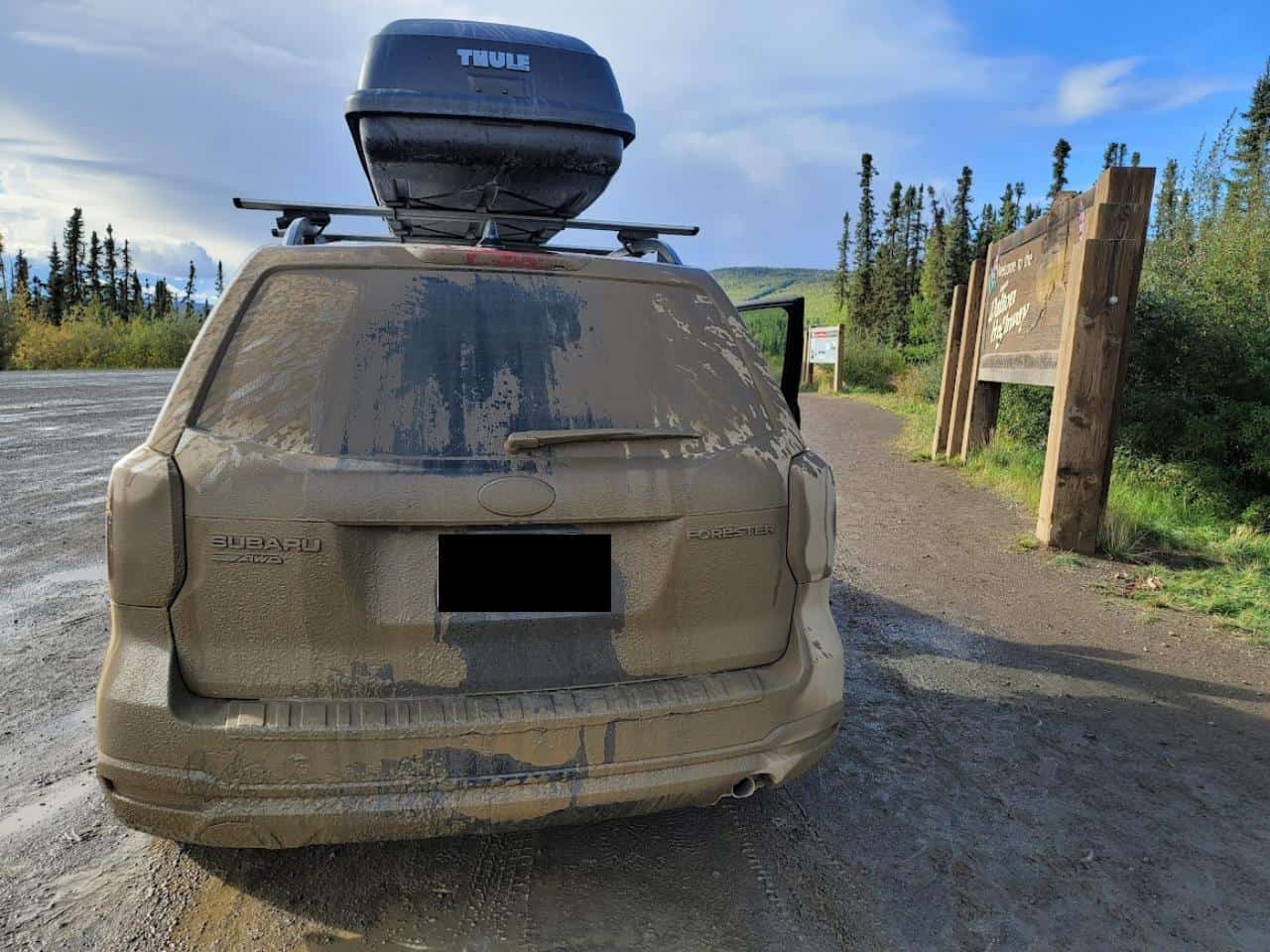
- A spare water jog just for cleaning your windows — this might seem excessive, but just take a look at our car after driving through Alaska on the Dalton Highway below. You can see where we attempted to use a water bottle that we filled with stream water to make a spot where we could see!
Tips for Road Tripping Across North America (No Sugar-Coating It)
1. Don’t Overplan. Seriously—leave some room for spontaneity! Some of our best memories came from random detours, national forest roads, or tiny towns we’d never heard of. Like the time we came across a pack of five wolves in British Columbia, simply because we decided to turn down a dirt road.
2. Always carry cash. Some rural gas stations, ferry crossings, and campsites are still cash-only. It’s not 2025 everywhere in the world, so keep that in mind.
3. Weather will mess with you. We’ve driven through whiteout blizzards in June and 100ºF deserts in October. Pack for everything. Rain jackets, sandals, insulated layers. Don’t assume summer means warm.
4. Get gas often. It may seem excessive or unnecessary, but every time you see a gas station – stop. Unless you’re in a major city where they’re plentiful. You should always be thinking about the next station that’s open, and have a back-up plan in case it’s closed.
Especially in Canada, Alaska, and anywhere west of the Mississippi, we’ve seen stations closed “until further notice” that said they were open online. We were able to make it the entire road trip without buying an additional gas cannister for the outside of our car, but we cut it pretty close on a few occasions.
5. Lock everything down. Don’t leave valuables visible and invest in a lockbox or use a decoy bag with nothing inside. It’s the sad reality of being on the road with a lot of your belongings with you, you’re going to be targeted by horrible people. Keep backup credit cards and cash in separate spots, and always keep your passports locked away.
6. Campsite availability sucks mid-summer. You’ll need to book months ahead if you want to stay in popular national parks, but don’t panic—there are always options. Use apps like The Dyrt, iOverlander, or Campendium to find national forests, BLM land, or lesser-known sites.
7. Know where you’re allowed to sleep. Wal-Mart, Cracker Barrel, truck stops, BLM land—it all depends on local laws. Always read reviews, and don’t park somewhere sketchy just because an app says you can or you may end up getting towed, ticketed, or even arrested.
8. Be flexible with hygiene. Showers won’t happen every day. It’s best that you come to terms with that now. And you won’t always feel clean.
Dry shampoo, baby wipes, and a quick face wash with cold water can save your day (and your sanity), so find a brand you like before you go and keep them well stocked during your drive!
9. Keep your car clean-ish. It’s your kitchen, bedroom, and hangout space. A daily 2-minute tidy-up goes a long way. Sweep out the dust, throw away trash, and shake out the crumbs from your seat.
10. Always bring more snacks. More than you think you need. When you’re 4 hours into a remote drive with no gas station in sight, you’ll be glad for that extra granola bar stash.
11. Talk to locals. Some of our best hikes, food stops, and campsites were local recommendations! Small town gas station attendants know their stuff, so don’t be afraid to ask around.
12. Embrace the slow days. Not every day has to be epic. Some days are just for laundry, errands, or watching the sunset from your camp chair—and those days matter too. It took me a long time to get used to this idea, but once I did, every day just felt a bit less chaotic.
13. Keep a journal. It’s easy to forget where you were three days ago, especially when you’re running off of gas station coffee cans and car sleep. Jot down notes, stories, routes so you can look back on what your average road trip day looked like years down the road. It’ll make for a good laugh.
14. Trust your gut. If a campsite, town, or road doesn’t feel right—leave. We’ve bailed on several places just because something felt off. Better safe than sorry.
15. Don’t forget to check your oil. Especially if you’re driving a lot of miles in short windows, it’s a good idea to store an extra quart of your car’s oil in the trunk. Your car is your lifeline—treat it like one!

FAQ
What essentials do you need for a long car ride?
A “long car ride” could mean a many different types of things, but for the most part, whether you’re driving for 3 hours or 3 days, you’ll need snacks, water, comfortable clothes, your phone charger, maybe a neck pillow, and hand wipes.
It’s also essential to have your offline maps downloaded, a spare tire set-up, a reflective vest in case you need to be on the side of the road for any amount of time, and jumper cables.
👉 Bonus: you could also say that having a killer playlist is essential!
What should I wear on a 10-hour road trip?
Stretchy, breathable clothes are essential to keep you from sweating too much or feeling claustrophobic. Think joggers, leggings, oversized tees, and zip-up hoodies.
Slip-on shoes or sandals make gas station stops easier, and be sure to avoid tight waistbands or stiff fabrics like jeans.
What do I need to drive across the U.S.?
Technically speaking, to drive across the United States, you just need a valid driver’s license, proof of insurance, vehicle registration, and a well-maintained car.
The rest is all just to make you more prepared should anything come up, but take it from someone who’s driven over 35,000 miles across North America – something WILL come up.
What should I pack for a road trip to national parks?
If you love national parks like we do, be sure to bring your national park pass (if you don’t have one, get one!), sturdy shoes, layers for all temps, bear spray, bug spray, a hydration pack or reusable water bottles, trail snacks, first aid kit, sunscreen, and a sense of adventure.
Binoculars and a lightweight daypack are also important add-ons!
What do I need to cross from the U.S. to Canada by car?
To cross from the U.S. to Canada by car, you need a valid passport (or passport card), vehicle registration, and proof of insurance (including international coverage if possible). If you’re traveling with any pets, you’ll also need proof of a recent rabies vaccine.
Crossing from the U.S. to Canada is usually straightforward as long as you don’t have anything to hide, but try to cross with pepper spray, cannabis, firearms, etc. and you will be taken out of the line in handcuffs, so keep that in mind.
How many days does it take to drive across the U.S.?
The fastest route takes around 4–5 days coast to coast if you drive 8–10 hours a day, but road trippers aren’t typically in it for a “record time.”
The whole point of this North America road trip essentials list is to ensure you’re prepared for a long, enjoyable journey that takes you to endless national parks, mountain regions, deserts, and small towns along each coast.
To do this, you’ll want to give yourself at least 2–3 weeks, but 4-6 weeks is more typical. That way you can stop in national parks, quirky towns, or even take scenic routes like Route 66 or the Pacific Coast Highway.
Can I sleep in my car legally?
It depends on where you are, but many states do provide pull-offs further removed from major highways so you can safely rest during your drive for up to 8 hours.
Wal-Mart often permits it (we’ve slept in our car in about 10 different Wal-Marts across the country), but some cities prohibit it altogether. To know for sure, you’ll need to check local ordinances and look for signs stating whether or not it’s allowed.
What’s the best app for finding campsites or sleeping spots?
We used iOverlander a ton for free and dispersed camping, but we’ve also heard good things about The Dyrt and Campendium for reviews and amenities.
For stealth city camping, use Park4Night or local Facebook groups.
How much should I budget per day for a North America road trip?
When we did our trip we were a bit frugal, so we budgeted about ~$60/day for gas, groceries, and a basic campsite or car sleep. This cost about $1,600 for a 27-day drive from Boston, Massachusetts to Prudhoe Bay, Alaska.
Mid-range budgets with occasional hotels and restaurant meals will rise to the $150–200/day range, but if you add in national park entry fees, showers, laundry, etc., it could go even higher.
What kind of insurance should I have?
Make sure your car insurance covers long-distance travel and out-of-state driving. If you’re renting a vehicle, double-check rental coverage.
We had AAA for roadside help which we only needed to use once, but it was still a good thing to have. It’s also not a bad idea to double-check that your health insurance covers you in Canada and Alaska if you plan on driving there.
How do I keep food from spoiling without a fridge while on a road trip?
It’s a good idea to rotate perishables meaning eat your fruits and veggies first. Use a high-quality cooler with block ice and store dry goods in sealed containers.
Avoid buying anything that melts (like chocolate) and meat and dairy if you can’t keep it cold.
What’s the best time of year to road trip North America?
Summer is the best time of year for driving through Canada and Alaska, while spring and fall are ideal for the South, Southwest, and national parks.
It’s a good idea to avoid hurricane season in the Southeast and snowstorms in the Rockies unless you’re very well prepared and have some real experience driving in severe winter conditions.
Road-tripping across North America is one of the most dynamic and rewarding ways to explore the continent. The variety of landscapes, the freedom to take unexpected turns, and the lessons you learn on the road are unmatched.
It’s not always comfortable or easy—but that’s part of the experience. You’ll come out of it with better stories, deeper confidence, and a new appreciation for the open road.
Whether you’re traveling for a few days or a few months, packing the right gear and having realistic expectations can make all the difference. This list of North America road trip essentials was built from real experiences and we truly hope you can use it to help shape your own adventure!
Up next, check out these 75+ USA Summer Bucket List Items you should add to your road trip!


