
Is Alaska Expensive To Visit? A Realistic Cost Guide (2026)

Is Alaska expensive? How much does a trip to Alaska cost? These are two of the most common questions I hear from travelers dreaming about a trip to the Last Frontier, and honestly, I get it.
After living all over the state and visiting for years on end (from the rugged coastline of the Kenai Peninsula to the wild, open stretches of Interior Alaska), I’ve seen firsthand how wildly trip costs can vary depending on where you go, when you go, and how you like to travel.
But here’s the good news: whether you’re planning a shoestring adventure or a luxury wilderness escape, Alaska can absolutely fit your budget with the right planning.
In this guide, I’m breaking down the real costs of traveling in and to Alaska, from flights and lodging to tours, cruises, and even gear. You’ll also find my top money-saving tips to help you get the most out of your trip without sacrificing the experience.
Let’s dive into the details so you can start building your dream Alaska itinerary with confidence!
How Much Does It Cost to Go to Alaska for a Week?
Alaska isn’t a budget destination by default, but with some smart planning, it doesn’t have to break the bank either. The total cost of a trip can vary significantly depending on the season, how you travel, and what kind of experiences you’re after.
Here’s a general breakdown to give you a realistic idea of what to expect for a 7-day trip during peak summer (June–August), according to myself among several other Alaska experts I personally know:
Solo Traveler
- Budget: $1,800–$2,500
- Mid-range: $2,500–$4,000
- Luxury: $4,500+
Includes flights, lodging, food, activities, and transportation.
Couple (2 adults)
- Budget: $3,200–$4,500
- Mid-range: $4,500–$7,000
- Luxury: $8,000+
Many tours and accommodations are priced per group or double occupancy, so couples often get more value per person.
Family of 5 (2 adults, 3 kids)
- Budget: $6,000–$8,500
- Mid-range: $9,000–$12,000
- Luxury: $15,000+
Family costs can vary widely based on the kids’ ages, tour availability, and rooming setups.
➡️ Note: These figures include:
Meals (mix of restaurants and self-catering)
Roundtrip airfare from the continental U.S.
Lodging (mix of hotels, cabins, and/or Airbnbs)
Car rental or public transportation
2–4 guided tours or excursions
Cruise vs. Land-Based vs. Combo Trips
When planning your Alaska vacation, one of the first decisions to make is how you want to explore the state. Each style of travel offers a different kind of experience and price point.
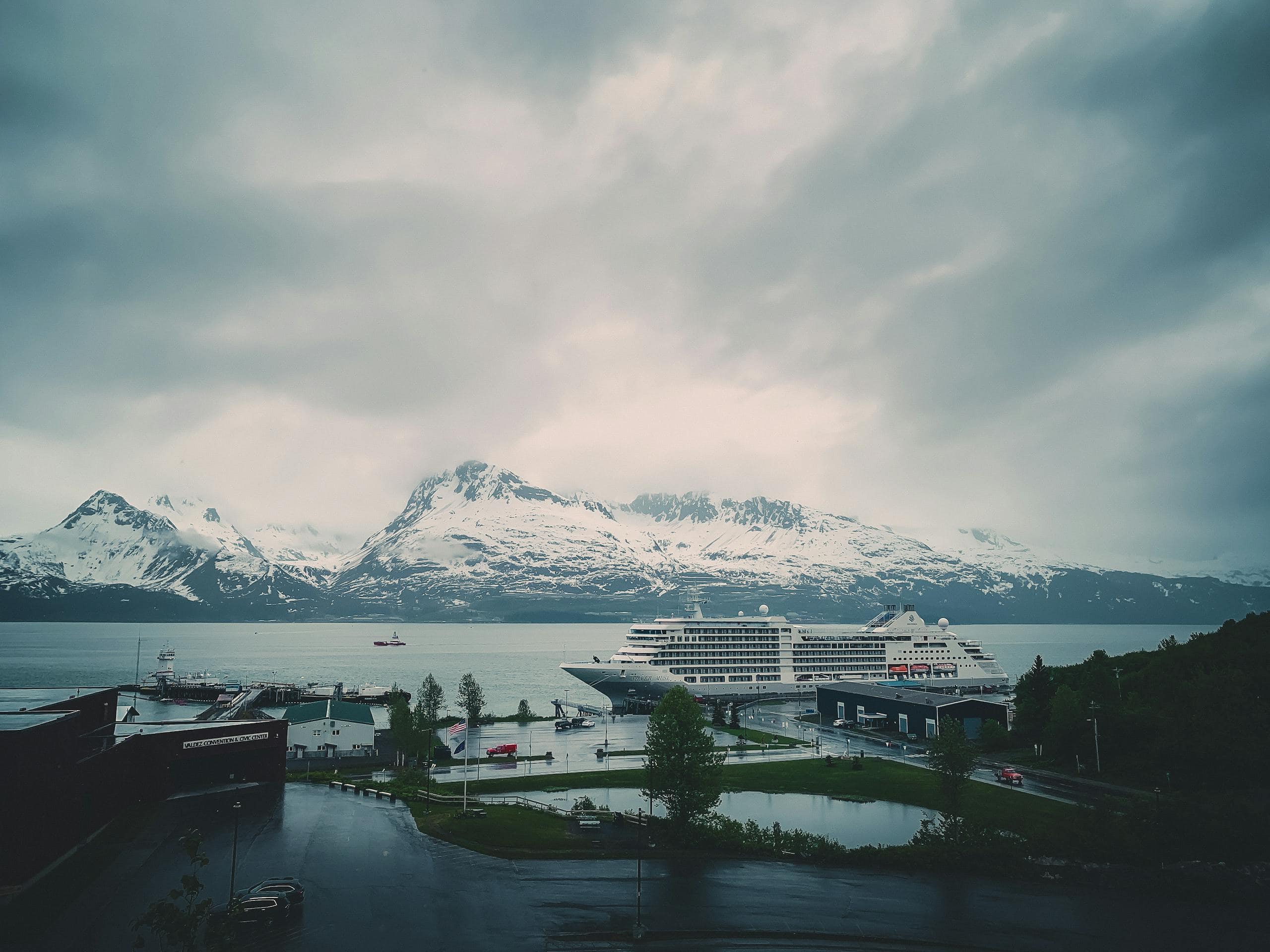
We’ve always enjoyed traveling the state via plane, car, ferry, and train, but Alaska cruises also offer and exceptional way of seeing a large portion of the state’s vast coastline! It can also be a far more cost-effective way of getting around the state thanks to the all-inclusive nature of most Alaskan cruises.
Cruise (7-Day Inside Passage)
- Average cost per person: $1,200–$3,000+
- What’s included: Room, meals, onboard entertainment, and some basic activities
- Extras: Shore excursions ($100–$400 each), drink packages, specialty dining, upgraded rooms with windows and balconies, gratuities
- Best for: First-time visitors, laid-back travelers, those wanting a taste of coastal Alaska without planning all the logistics
Land-Based Trip
- Average cost per person (7 days): $2,500–$4,000
- What’s included: Custom itinerary, local lodging, rental car or train, more immersive and flexible experiences
- Extras: Guided day tours, park entrance fees, meals
- Best for: Nature lovers, hikers, photographers, and travelers who want to go beyond the cruise ports (like Denali, Wrangell-St. Elias, Anchorage, Talkeetna, or the Arctic)
Combo Trip (Cruise + Land Extension)
- Average cost per person (10–14 days): $4,500–$7,500+
- What’s included: 7-day cruise + 3–7 day land extension (often to Denali or Fairbanks)
- Extras: Transfers, excursions, meal costs on land
- Best for: Travelers who want the best of both worlds: scenic cruising and the chance to explore deeper inland
🧭 Pro Tip: If you’re coming all the way to Alaska, I always recommend doing at least a partial land component. Cruises show off the coastal beauty, but Alaska’s soul lives in its vast interior!
Tips to Save Money on Your Alaska Trip (from Someone Who’s Been There!)
Alaska is worth every penny, but if you know where to cut costs and where to splurge, you can create an unforgettable trip without maxing out your credit card. Here are my go-to tips from years of living, exploring, and helping others plan their dream adventures in the Last Frontier:
- Travel During the Shoulder Season (May or September)
- Summer is gorgeous, yes, but May and September still offer amazing wildlife viewing, fewer crowds, and cheaper flights and accommodations. Lodges and tours often offer discounts before the peak rush hits in mid-June.
Bonus: In early May, you’ll catch Alaska just as it’s waking up, and in mid-late September, you might even spot some early northern lights!
- Summer is gorgeous, yes, but May and September still offer amazing wildlife viewing, fewer crowds, and cheaper flights and accommodations. Lodges and tours often offer discounts before the peak rush hits in mid-June.
- Skip the Cruise Excursions (Book Independently Instead)
- Cruise excursions are super convenient, but also super overpriced! Most ports are walkable, and you can book the exact same tours for a fraction of the cost either in advance or at the dock.
- Cruise excursions are super convenient, but also super overpriced! Most ports are walkable, and you can book the exact same tours for a fraction of the cost either in advance or at the dock.
- Split the Cost of a Rental Car or Van
- If you’re traveling with a group or meeting others, consider splitting a rental vehicle to save big! I’ve seen daily rates in the summer hit as high as $175+, and car borrowing apps like Turo aren’t always dependable since the owners can cancel last-minute.
Vans and SUVs often end up cheaper per person than multiple cars, so this can be a fantastic way of cutting down on costs.
- If you’re traveling with a group or meeting others, consider splitting a rental vehicle to save big! I’ve seen daily rates in the summer hit as high as $175+, and car borrowing apps like Turo aren’t always dependable since the owners can cancel last-minute.
- Take Advantage of Free or Low-Cost Activities
- This one may seem obvious, but many people forget that Alaska is literally an outdoor playground. Many of the best experiences are completely free including hiking trails (Flattop, Exit Glacier, Savage River Loop), scenic drives (Turnagain Arm, Denali Hwy), wildlife viewing, visitor centers, ranger talks, and local museums.
- This one may seem obvious, but many people forget that Alaska is literally an outdoor playground. Many of the best experiences are completely free including hiking trails (Flattop, Exit Glacier, Savage River Loop), scenic drives (Turnagain Arm, Denali Hwy), wildlife viewing, visitor centers, ranger talks, and local museums.
- Buy Groceries and Pack Picnics
- One of your biggest expenses of visiting Alaska will be the food. We absolutely love a good seafood dinner with wine, oysters, and a rich seafood scampi, but this often leaves us with ~$200 less in our bank account each time we do it on the Kenai Peninsula!
The Wal-Mart Supercenters and local Safeways provide a ton of premade food options that will save you an enormous chunk of money on your vacation. At the bare minimum, we recommend eating at these stores for breakfast and lunch and then doing a roadhouse or cafe for dinner.
- One of your biggest expenses of visiting Alaska will be the food. We absolutely love a good seafood dinner with wine, oysters, and a rich seafood scampi, but this often leaves us with ~$200 less in our bank account each time we do it on the Kenai Peninsula!
- Consider Camping or Rustic Cabins
- If you’re up for a bit of adventure, Alaska has incredible public-use cabins, state park campgrounds, and Forest Service rentals with some as low as $0–$75 per night.
Many are right on lakes or tucked into national parks, but you’ll just want to take a look at whether they’re first-come first-serve or if you can make a reservation in advance. You can use the Division of Parks and Outdoor Recreation site to check this before you go!
- If you’re up for a bit of adventure, Alaska has incredible public-use cabins, state park campgrounds, and Forest Service rentals with some as low as $0–$75 per night.
- Don’t Overbook Your Schedule
- It’s tempting to want to do everything in a state as gorgeous and grand as Alaska, but slow travel isn’t only more budget-friendly, it’s also a lot more meaningful. Give yourself time to explore towns, chat with locals, and enjoy spontaneous stops. Fewer guided tours = less $$ and more flexibility.
- It’s tempting to want to do everything in a state as gorgeous and grand as Alaska, but slow travel isn’t only more budget-friendly, it’s also a lot more meaningful. Give yourself time to explore towns, chat with locals, and enjoy spontaneous stops. Fewer guided tours = less $$ and more flexibility.
- Bundle Excursions for a Discount
- Some tour operators offer discounts if you book more than one activity with them like a glacier hike + wildlife cruise combo, or a flightseeing tour + dog sledding. Northern lights viewing + ice fishing is probably the most common we see in Fairbanks in the winter.
- Some tour operators offer discounts if you book more than one activity with them like a glacier hike + wildlife cruise combo, or a flightseeing tour + dog sledding. Northern lights viewing + ice fishing is probably the most common we see in Fairbanks in the winter.
- Use Ferry Transport Instead of Flying
- The Alaska Marine Highway System is one of the most underrated ways to travel and it can be much cheaper than flying between coastal towns. It’s slower, sure, but you’ll get insane views and a truly local experience for a fraction of the cost! Plus, it’s actually how most of the locals get around if they don’t have their own floatplane in Southeast Alaska, so you’re getting a far more authentic Alaskan experience this way.
- The Alaska Marine Highway System is one of the most underrated ways to travel and it can be much cheaper than flying between coastal towns. It’s slower, sure, but you’ll get insane views and a truly local experience for a fraction of the cost! Plus, it’s actually how most of the locals get around if they don’t have their own floatplane in Southeast Alaska, so you’re getting a far more authentic Alaskan experience this way.
- Skip the Souvenir Shops! Buy Local & Useful Instead
- Rather than dropping $30 on a generic T-shirt, consider spending your souvenir money on something local and practical. Handmade soaps, wild berry jams, or smoked salmon from a market, a buff or hoodie from a local outfitter that you’ll actually use, and locally roasted coffee beans or small-batch fireweed honey make for excellent Alaskan gifts!
Cheapest Months to Travel to Alaska
If you’re looking to stretch your dollars and still soak in that iconic Alaska scenery, shoulder season is where it’s at. While summer (June–August) gets all the hype, May and September are hands-down the best months to visit if you’re hoping to save money and avoid the crowds.
Besides, the idea that Alaska has the best weather in the summer is poppycock. I got married in Seward on July 10th, and July 1-9 were monsoon weather. We were so fortunate that our wedding day was 70 and beautifully sunny, but then it returned to sideways rain and 40-degree temps until October!
What I’m saying is, just because you visit during the expensive summer months doesn’t mean you’ll get nice weather. In fact, we’ve seen some of the best weather of the year between September and November! We’ve included a more detailed breakdown below:
Cheapest Months to Visit:
- Early May (May 1–20):
- Lodges and tours are just opening for the season (keep in mind that many don’t open until May 15th- my birthday!)
- Prices are lower across the board (flights, lodging, tours)
- Snow is still present in the higher elevations, but towns like Seward and Homer are thawed out and gorgeous
- Late September (Sept 10–30):
- Fall colors in full swing, especially in Denali and the Interior
- Lower prices as tourism winds down
- Northern lights potential begins to increase!
Pros and Cons of Shoulder Season Travel in Alaska
✅ Pros
- Lower Costs Across the Board
You’ll often find flights 30–50% cheaper than peak summer, and many hotels, tours, and car rentals offer preseason or end-of-season rates. - Fewer Crowds
Want a glacier hike without the busloads of cruise passengers? This is your window. Trails, visitor centers, and even scenic highways feel more like “local Alaska” during shoulder season. - Unique Photo Ops
May brings snow-capped peaks and budding wildflowers, while September paints the tundra in golds, reds, and deep oranges. Both are incredible for photography. - Wildlife Is Still Active
In May, bears are emerging from hibernation, moose calves are being born, and birds are migrating in. In September, bears are fattening up for winter, and the salmon runs are wrapping up, meaning predators are still active around rivers and streams.
❌ Cons
- Limited Availability
Some tours, ferries, and lodging options don’t operate outside of the June–August window. Always double-check opening and closing dates, especially in smaller towns or national parks. - Unpredictable Weather
May can still bring rain and lingering snow in the Interior, while September often means cooler temps and a higher chance of rain, especially in Southeast Alaska. It’s also not abnormal to see snow in Fairbanks quickly after the end of summer. - Shorter Daylight Hours (in September)
While not a dealbreaker, you’ll have fewer daylight hours in September compared to peak summer. It’s just something to keep in mind if you’re planning big hikes or road trips.
🧭 Emily’s Advice
“If you’re flexible and okay with a little unpredictability, shoulder season is pure magic. Some of my best memories in Alaska happened in May and September when the mountains are consistently covered in a golden glow, the crowds disappear, and the state feels both wild and intimate!”

Alaska Cost FAQs
What is the average cost to go to Alaska?
On average, a 7-day Alaska vacation costs around $3,000 per person, which breaks down to a little over $400 per day. I know this sounds really expensive, but this is inclusive of flights, accommodations, car rentals, meals, and tours.
I even threw in a little room for souvenirs! So, yes, Alaska can be quite expensive, but $3k is well worth budgeting for if you can to see one of the last truly wild places on Earth.
What is the average cost of a 7-day Alaska cruise?
The average price for a 7-day Alaskan cruise ranges from $1,300 to $3,500 per person. I know this is a massive range, but it comes down to some key factors like the cruise line you choose, the type of cabin you get, and what you decide to include in your package.
Balcony suites with the all-inclusive drink package could even go over this cost range depending on the cruise ship. But, I’ve also talked to some family members of mine that scored a 9-day Alaskan cruise out of Seattle for just $1,100/person!
Booking extremely in advance or very last-minute (think 2-3 days before departure) almost always scores you the best deals. If you decide to visit via cruise ship, download our free PDF Alaska cruise packing list!
What is the cheapest time to go to Alaska?
The shoulder seasons of April to May and September to October are typically the most affordable times to travel to Alaska.
But, keep in mind that while you still may get some decent weather during this time depending on where you go, you have to remember that since the demand is lower, many operators may not be open yet.
Due to the state’s high cost of living, locals won’t keep their doors open even a day longer than they believe will be worth the cost of operating. Thus, it’s not abnormal to see businesses strictly operating between mid-May and late August.
Is it possible to visit Alaska on a budget?
You can absolutely visit Alaska on a budget since being on a budget doesn’t mean “unable to go.”
While Alaska is known for being an expensive destination, we were able to visit for 6 days as college students for less than $2,500. We booked the cheapest flights we could find, ate at grocery stores, and did a ton of free activities like hiking, fishing, and local sightseeing with our rental car.
We drove all over the interior of the state down to the Kenai Peninsula, and didn’t leave a second for relaxing. We made the most of our trip eating granola bars and laughing at how much fun we were having!
What many people don’t believe us when we say is that this trip also included a bear viewing tour to Lake Clark National Park, renting and riding bikes 25 miles through Denali National Park, and taking a fjords cruise through the Kenai Fjords!
There’s no reason you can’t visit Alaska on a budget. You just have to be willing to make some sacrifices on the typical luxuries of travel like eating at fancy restaurants or enjoying helicopter rides every other day.
How much should I budget for food in Alaska?
It depends on where you plan to eat, but we think between $50-100 per day person is quite standard. $50 is great for the budget savvy traveler who plans on eating most of their meals from grocery stores and the occasional cafe or food truck, while $100 is great for someone planning on getting a $40 steak for dinner.
Of course, if you want to start adding in gratuities, the cost of alcohol, appetizers, and desserts, then the high end will likely rise to around $150 per person per day.
Are there affordable alternatives to popular excursions like glacier paddleboarding?
Unfortunately, there’s no tour I can provide you that will give you the saw jaw-dropping moment as paddleboarding on a glacier or seeing a bear up close and personal at Brooks Falls in Katmai National Park.
These are the experiences that are probably drawing you to Alaska in the first place, so if you need to cut back on costs, don’t do it here! Instead, opt to camp, sleep in your rental car (it’s allowed in almost all Alaska State Highway pull-offs), and eat from the grocer.
I promise, it’s not worth saving money on the experiences. These are what you’ll remember for your entire life, and one day you’ll just laugh about all of the granola bar wrappers in the back of your rental car when you returned it on the last day of your trip.
If you can’t afford to experience Alaska the way you want to, that’s okay! Hold off for a little while longer and save up until you can. You don’t need $10,000 to go, but having $2,000-3,000 will allow you to do and see everything you want without sacrificing your experience!
Final Thoughts- Is Alaska Expensive?
Whether you’re dreaming of cruising through glacier-carved fjords, hiking among alpine tundra, or spotting bears in the wild, Alaska offers a once-in-a-lifetime experience for every kind of traveler.
While the state is known for its remote beauty and rugged terrain, it doesn’t have to be out of reach financially. With the right planning, you can explore the magic of Alaska on nearly any budget, from backpacker to bucket list!


